[ad_1]
Kerrie O’Brien
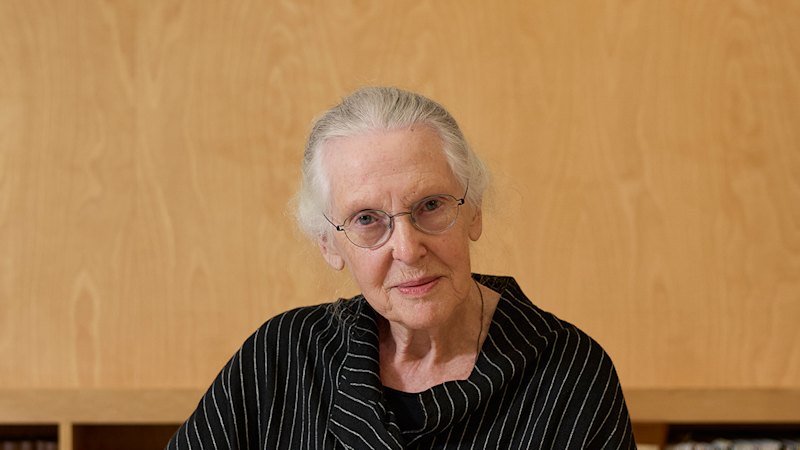
Mary Featherston is something of a rock star designer, not that she’d like to hear that.
Refreshingly without ego at 83, she wants her vision to be known, rather than her name.
In the 1950s, together with her late husband Grant, Featherston created some of the most aesthetically and technically radical furniture of that era. Their chairs in particular put Melbourne on the design map globally and are highly sought after today.
Featherston believes design is integral to social change. As a working mother, she was an early advocate for childcare being freely available, a radical concept in Australia at the time.
Her work with educators, academics, architects and artists focuses on how good design can improve children’s education.
“For 60 years I have been both designer and an activist, but at this stage, it’s more activist,” she says.
Speaking ahead of a talk at the NGV this week, as part of Melbourne Design Week, Featherston says motivation and engagement are critical ideas in schooling. While that should be obvious, she fears it is often overlooked.
“If you look at the way children naturally learn, anybody who’s observed little children, you can see they’re on the move. They’re exploring, testing, poking, experimenting, making, and then as they develop language, they’re asking lots of profound questions,” she says.
“The problem is that schools tend to put that aside and say, well, that’s not relevant.”
Featherston refers to the default approach of single classrooms with desks and chairs as straitjackets, and wants to see much more flexible learning spaces. Rooms for children to come together in large groups, intimate, quieter spaces, more hybrid areas, and spaces devoted to making and play are all critical.
“I’m really advocating for a new culture of schooling, which means a transformation,” she says.
“We’re have a lot of problems, as you will be very well aware. Kids don’t want to go to school, teachers don’t want to teach, principals don’t want to be principals.”
Somehow we’ve ended up with classrooms that privilege academic study above all else, she argues. “It said that the ‘other stuff’ – that creative, imaginative thinking – we better do a bit of that so we’ll have a place, and you can go there once a week.”
Featherston is a firm believer that good design leads to positive education outcomes for all, and that those better outcomes, in turn, lead to better societies.
To her mind, the answer lies in harnessing natural tendencies: looking at the best way kids learn. Lots of great research – from Harvard, MIT, London University and more – she says, shows curiosity is the best driver.
It’s something she has seen first-hand through collaboration with friend and educator Dr Esme Capp, who works at Princes Hill Primary School. Along with Featherston, Capp is big on the notion of student-led learning. She also cites research that shows all learning is emotional, that the brain really develops through complex interactions with the environment, and a lot of it involves emotion.
One of Featherston’s proudest achievements is co-designing the original children’s museum (1985-1997) for Museums Victoria.
Featherston grew up in England, then, in 1953, her family immigrated to Melbourne. After high school, the then Mary Currey went to RMIT to study interior design. Soon after, she met Grant and they had a family, and worked together for many decades, designing furniture and spaces, objects and more.
She and Grant also worked on the interiors of the NGV international building when it opened in 1966. An adjunct professor at RMIT University, in 2020 she was made a member of the Order of Australia.
Featherston still lives in the house on Merri Creek that Robin Boyd designed for her and Grant, in a separate part her son Julian has renovated for her. (Grant died in 1995.)
It feels as contemporary now as it did then, revolutionary in its day for its extensive use of glass, soaring two-storey ceilings and for prioritising a work environment in the home. That’s another thing about excellent design, according to Featherston – it has longevity.
Mary Featherston will speak at the NGV on May 20 on “A Life in Design” as part of Melbourne Design Week.
From our partners
[ad_2]
Source link