[ad_1]
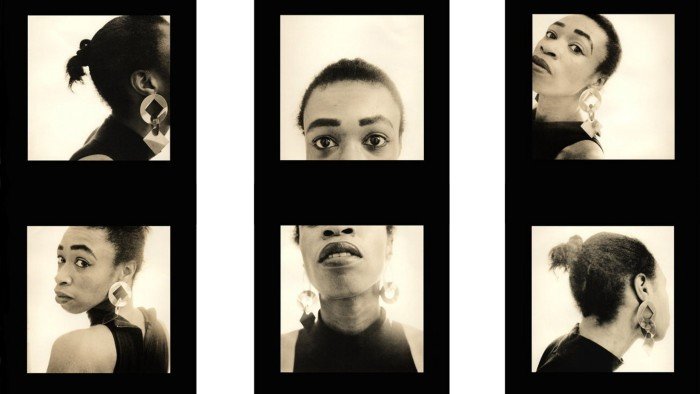
A major exhibition devoted to the work of British artist Joy Gregory opened at the Whitechapel Gallery in London this week. Spanning four decades of art-making, it includes photographs dealing in subjects ranging from ideas of beauty to colonialism and its legacies, deploying historical methods such as cyanotypes and kallitypes. A new video focuses on a critically endangered South African language known as N|uu banned under apartheid, and now spoken by only one elderly indigenous inhabitant of the Kalahari region.
This is the artist’s first extensive survey show and, remarkably, she has achieved it without the support of a commercial gallery. For most of her career Gregory has worked independently, barring a stint with the now-shuttered Zelda Cheatle gallery. While some artists may sell their work on their own, sometimes lots of it, without the backing of art dealers, not many are honoured with large exhibitions at major museums.


Contemporary gallerists are tastemakers who champion their artists to curators and collectors. Their origins date back to the late 19th century, when Paul Durand-Ruel set up shop in Paris to sell work by the likes of Monet, Renoir, Manet and Degas. He promoted his painters tirelessly on both sides of the Atlantic and, in the process, invented the role of art dealer as an influential advocate for new artistic styles. Can artists working without one succeed today?
Gregory, 65, built her career from the grassroots up, working in council-funded arts spaces, such as the now-defunct North Paddington Community Darkroom, before she could afford to set up her own photography studio. She taught in art schools — she is currently an associate lecturer in photography at Camberwell College of Arts — and obtained public commissions, fellowships and grants. Her Whitechapel show has been funded with the £110,000 Freelands Award, devoted to mid-career female artists who have not yet received major public recognition. “I haven’t missed not having a gallery because I’ve been very supported by the art community,” she says. “I’ve had so many shows right from the beginning.”

In an era of declining public funding and cash-strapped councils, is a career trajectory like Gregory’s still possible for young artists? “It’s really, really hard,” says Whitechapel director Gilane Tawadros. “Thirty years ago there were more low-level grants. It wasn’t so difficult to get unemployment benefit. Lots of artists squatted, so they didn’t have to pay rent. It was still challenging, but you could get by.” Also, crucially, art schools were free. Today, young artists can graduate with tens of thousands of pounds of debt.
What they have access to, however, that Gregory’s generation did not is Instagram and TikTok. Social-media-savvy artists with an entrepreneurial mindset can achieve commercial success even without a gallery. Take New-York based Australian artist Cj Hendry, 37, whose hyperrealist drawings have gained her more than 915,000 followers on Instagram. She and her team sell her work — the drawings can go for as much as $500,000 — organise her shows and immersive experiences, and forge partnerships with multiple brands. Last month she staged a “flower market” in Rockefeller Center in New York with more than 100,000 plush flowers designed by the artist on display. Each visitor received one for free with additional ones on sale for $5 each alongside merchandise such as tote bags and T-shirts.


“The barriers to entry are so low to promoting yourself on social media. If you have a talent for marketing and for photographing things, it’s possible to create a beautiful, online portfolio and lots of artists are selling that way,” says New York art adviser Maria Brito. However, galleries are still “indispensable for artists who want to matter in history and not just in the market. They frame careers in an art-historical context, connect artists with museums and build legacies. You can’t TikTok your way into MoMA,” she says.
For older artists who have only received widespread recognition in recent years, galleries have played a crucial role. “In the past, funds were always very low and finding a space to work outside my home studio was sometimes a challenge,” says British artist Lubaina Himid, 71, who joined a gallery, Hollybush Gardens in London, for the first time in 2013. She describes the move as “a significant turning point” that enabled her to stage solo shows at the New Museum in New York in 2019 and Tate Modern in London in 2021. These exhibitions “could not have been achieved without the gallery’s moral support and industry expertise. Galleries are part of vast networks of curators, collectors and advisers. There are not many positive aspects of working without one if you want your work to reach a global audience,” says Himid, who also joined the Greene Naftali gallery in New York in 2022 and will represent Britain at next year’s Venice Biennale.
Nevertheless, gallery representation can be a burden for some. “Not having a gallery has been a freedom for me,” says Gregory. “I haven’t worried about what work is going to look like before I make it. A lot of artists complain that galleries are doing too many art fairs and will tell them they need a work for Art Basel or Frieze and insist they produce something they can sell there. I’ve never had to produce work that repeats itself over and over again.” Gregory has sold work straight from her studio or consigned it to galleries to sell at art fairs on a case-by case basis: the London gallery Huxley-Parlour is showing her work in the Spotlight section of Frieze Masters this week.

Another artist working without a gallery is rising star Rachel Jones, 34, who left Thaddaeus Ropac in 2023 after three years. Although the gallery and artist declined to comment, two sources close to Jones say she didn’t want the pressure of having to paint on demand for art fairs. Jones now manages her practice with the help of the independent curator Andrew Bonacina and has just unveiled two new commissions at the Courtauld Gallery.
Also in 2023, British painter Peter Doig — whose work has set records at auction and has been widely shown in major museums — walked away from his gallery, Michael Werner, which had represented him internationally for over two decades. He is still working solo and showing new paintings at the Serpentine as part of House of Music, an exhibition which integrates sound in his work for the first time.

Like Jones, some artists who work without galleries are teaming up instead with advisers, agents or managers. “It’s about regaining control of your practice,” says Valeria Szabó Facchin of the artist management company Studio Expanded. “What I suggest to artists is that they need to have multiple partners, all of whom need to give them the freedom to expand their practice and their business. Galleries are still critical but they can’t do everything.”

One of the artists Szabó Facchin works with is Jakob Kudsk Steensen, 38, from Denmark, who creates immersive digital environments which explore the natural world. Steensen has achieved the rare feat of showing work in multiple museums — including the Serpentine in London, the Beyeler Foundation in Basel, the Mori Art Museum in Tokyo and the Hamburger Kunsthalle — without commercial gallery representation. On October 17, he will unveil a major new installation at the Fondation Louis Vuitton in Paris entitled The Song Trapper. “I have very specific ideas about the work I want to make,” says Steensen. “I will not change my ideas in order to satisfy a gallery or a collector. If the work I make is good, someone will buy it.”
Whether artists work with or without a gallery, most agree that the overriding consideration is to find a way to stay true to your art. As Gregory puts it: “If you do things that don’t interest you, what’s the point?”
Joy Gregory: Catching Flies with Honey, October 8-March 1, whitechapelgallery.org
Find out about our latest stories first — follow FT Weekend on Instagram, Bluesky and X, and sign up to receive the FT Weekend newsletter every Saturday morning
[ad_2]
Source link