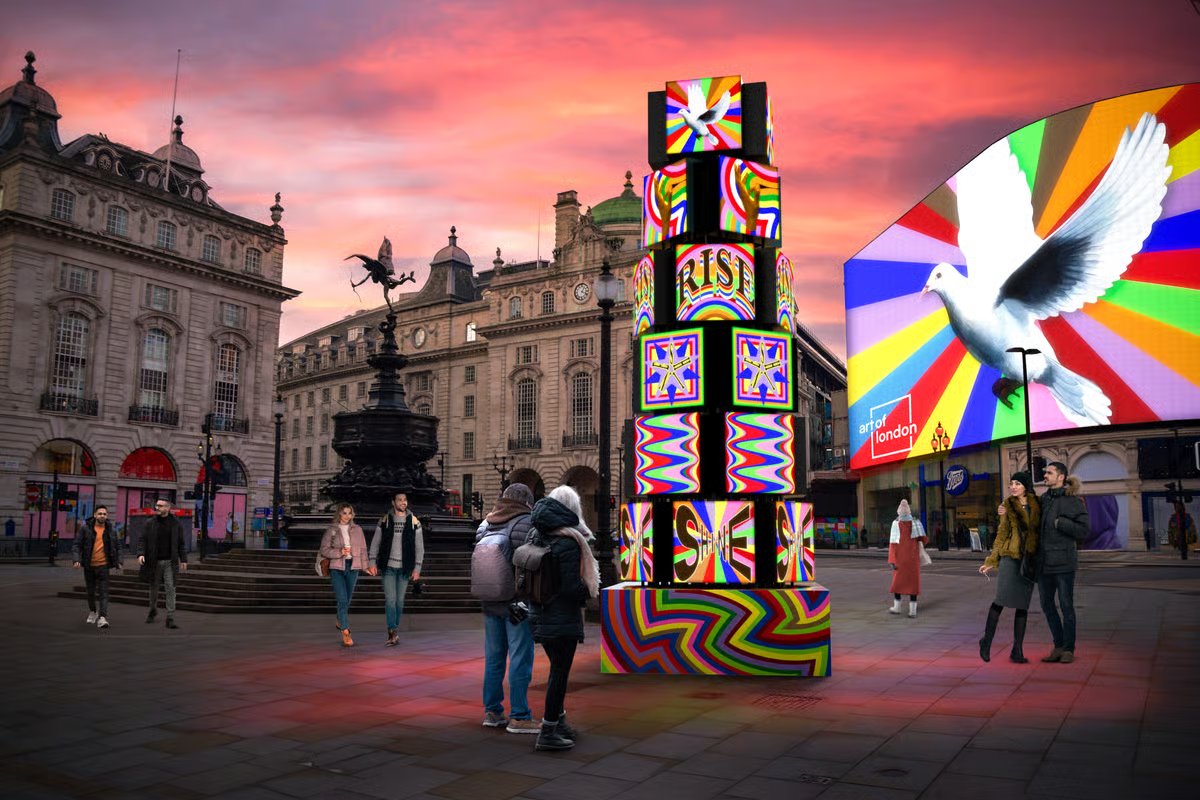
It’s impossible to miss. Overlooking a highway that connects Miami Beach to downtown Miami is a 1,800-square-foot digital billboard. With a larger footprint than a typical two-bedroom apartment, the screen advertises brands like Yves Saint Laurent and Tiffany & Co. Some passers-by might be surprised to learn the identity of its owner: the neighbouring modern and contemporary art museum, the Pérez Art Museum Miami.
The billboard, which is estimated to generate at least $1.2mn each year for PAMM’s operations, is indicative of a broader change under way at American museums. As they face mounting financial challenges, many art institutions are becoming increasingly entrepreneurial, experimenting with everything from art sales to tech innovation to real estate development.
“The typical store and café lose money for museums,” says Stephen Reily, the director of Remuseum, a think-tank housed by the Crystal Bridges Museum of American Art that promotes innovation in art institutions. He notes that US institutions often focus on the revenue such businesses generate without examining the high cost of operating and staffing them. “It serves them better to consider the kinds of businesses they could operate profitably.”


Some advocates say they have no choice but to experiment. Historically, museums have relied largely on donations from businesses, individuals, and government. Earned income accounts for, on average, less than a third of US museum revenue overall. Today, attendance remains lower than it was before the pandemic. Meanwhile, corporate sponsorship is dwindling, public arts funding under the Trump Administration has dropped, and a generation of donors that museums relied on for decades is ageing out.
To fill the gap, museums are looking to convert the expertise and assets they already have into sustainable income. In 2022, the Museum of Modern Art in New York began commissioning NFTs and digital art, taking up to a 20 per cent cut of every purchase made on the blockchain and up to 5 per cent on resales. That same year, the Georgia O’Keeffe Museum in Santa Fe patented a high-tech crate designed to better protect artworks in transit; it intends to license the technology to other businesses and non-profits in the future.

For old-school museum leaders, these kinds of moneymaking initiatives can provoke a knee-jerk shudder. Jessica Morgan, director of the Dia Art Foundation, initially felt uneasy about partnering with the company Avant Arte to produce and sell prints for €6,000 each because such commercialisation might “lessen an artist’s work”. Once she saw the quality of the prints, however, her fears dissipated. Since 2024, Dia has generated more than $5mn from editions by George Condo and Lee Ufan, with another due to launch in January. The foundation also recently entered into a three-year agreement to advise Netflix founder Reed Hastings on a public art park in Utah in exchange for an undisclosed fee.


“Every organisation is having this conversation right now, given the lack of certainty around federal funding,” says William Cary, the chief operating officer of the Barnes Foundation in Philadelphia. The Barnes has increased its earned revenue from $6mn in 2022 (20 per cent of its operating budget) to $8.1mn in 2025 (28 per cent of its operating budget). Its initiatives include consulting work for other organisations like the Museum Store Association; licensing its Visual Experience Platform, an online learning tool that allows students to zoom in on objects during a class; and taking on administrative tasks for two neighbouring institutions — Calder Gardens and the Pew Center for Arts & Heritage — through operating partnerships.
There is a danger of pushing this kind of entrepreneurial thinking too far, warns Natasha Degen, chair of art market studies at the Fashion Institute of Technology in New York. Under US law, nonprofits must pay additional taxes on revenue from any business deemed unrelated to their missions. Problems can arise when activities are “far outside the core competency of museums” and “direct resources away from the core mission”, Degen says.

PAMM’s mammoth billboard has sparked two lawsuits and put it at odds with some of its neighbours. In September, the museum agreed to pay a $500,000 annual fee to the city and limit the billboard’s operating hours as part of a settlement. The following month, the neighbouring Frost Museum of Science sued the Florida Department of Transportation, arguing that PAMM’s digital sign violates state law, advertises products unrelated to its business, and contributes to light pollution in the area. Frost Science’s CEO Douglas Roberts says his institution declined a similar billboard proposal; he considers hosting liquor, car and luxury ads “inconsistent with the mission of an art or science museum”. A spokesperson for PAMM notes that the billboard was “meticulously reviewed” by all relevant authorities and fully complied with state and local regulations.
Some entrepreneurial schemes don’t outlast the leaders who conceived them. Under its former director Hesse McGraw, the Contemporary Art Museum, Houston began offering “curatorial services” in 2020 to organisations across the US that sought to integrate public art into their facilities, with clients as far-flung as the Mayo Clinic in Minnesota and a water recycling facility in California. Moving forward, CAMH plans to prioritise projects closer to home. “These are good initiatives to explore in an effort to diversify revenue, but utilising existing museum resources to support these endeavours can create real challenges to sustaining and growing them long-term,” says Melissa Luján, who took over as CAMH’s chief operating officer and co-director last year.


Efforts to make museums more self-sustaining are not new. In 1979, after its endowment contracted, MoMA sold the air rights above its museum for $17mn, clearing the way for the construction of a luxury residential tower next door. “In the years that followed, lots of New York City institutions copied them,” Degen says. MoMA also operated an art advisory service for corporations until 1996.
But several factors make this current moment distinct, experts say. First, the cost of operating a museum — from shipping to staffing to insurance — has never been higher, according to several museum leaders. Second, a new generation is more comfortable than its predecessors with blurred lines between the non-profit and the commercial spheres. “That’s a generational shift that goes beyond the art world,” Degen says. “The whole idea of ‘selling out’ is no longer a thing.” Third, the public perception of museum philanthropy as purely altruistic has changed amid the growing backlash to donors such as BP and the Sackler family, as well as recent scrutiny of the role that commercial galleries play in supporting museum exhibitions of the artists they represent.

“Which is more nefarious?” asks Pete Scantland, the chair of the board at the Columbus Museum of Art in Ohio and the founder of Orange Barrel Media, the company that operates the billboard on PAMM’s property. “A programme that is dictated by galleries and collectors who can fund only the most prominent artists, or a museum that has creative freedom because they’ve developed a business model that allows them to support it independently?” Orange Barrel Media is developing similar billboard projects for approximately 10 other high-profile art institutions across the US.
Speaking before Frost Science filed its lawsuit, PAMM’s director Franklin Sirmans said that he couldn’t “overstate” the importance of the institution’s new revenue stream “as we confront the challenges that most museums are confronting in this moment”. In addition to hosting ads, he noted, the billboard also promotes the museum’s activities and hosts art commissions. He considers this marketing — which takes up around 20 per cent of the screen’s allotted time — as important as the revenue generated by advertisers.
The rise of entrepreneurship in American museums stands in contrast with the state of play in the UK, where institutions are increasingly reliant on private donors. Still, it’s not out of the question that the likes of Tate and the National Portrait Gallery could host a giant billboard or spin off a consultancy business in the years to come. As Degen says, the US is often “a window into the future for museums”.
Find out about our latest stories first — follow FT Weekend on Instagram, Bluesky and X, and sign up to receive the FT Weekend newsletter every Saturday morning