
Along the 25km Thames Tideway Tunnel – the vast £4.6 billion ‘super sewer’ civil engineering project that came into service last year – 21 new public spaces are being created adjacent to the river: high-quality public realm, each incorporating newly commissioned public art. Lead architect Clare Donnelly, director at Fereday Pollard & Partners, and the project’s public art consultant, Bridget Sawyers, spoke about the design.
When was it decided to create public spaces as part of the Thames Tideway Tunnel project?
Fereday Pollard & Partners joined [Tideway program manager] Jacobs’ multidisciplinary design team in 2009. Given the environmental purpose of the project, the client and project team felt extremely protective of the river and the communities along its banks. It became clear that enhancing how Londoners experience the Thames – essentially London’s largest open space – would be core to our mission.
When we began the project, no one used the term ‘blue spaces’. Since then, increased research tells us what we instinctively knew: people want to spend time in ‘green’ and ‘blue’ spaces. Waterside urban spaces are prized for their stress-reducing, mood-enhancing powers. On Tideway we’ve had the opportunity to deliver both.
We will be leaving behind approximately three acres of new public realm across the city. The new works popping above ground at 21 discreet and disparate locations required careful and intricate integration, but we also wanted to do more. We also had the fine precedent of Sir Joseph Bazalgette’s embankment system – both pioneering engineering and an exemplary piece of civic design.
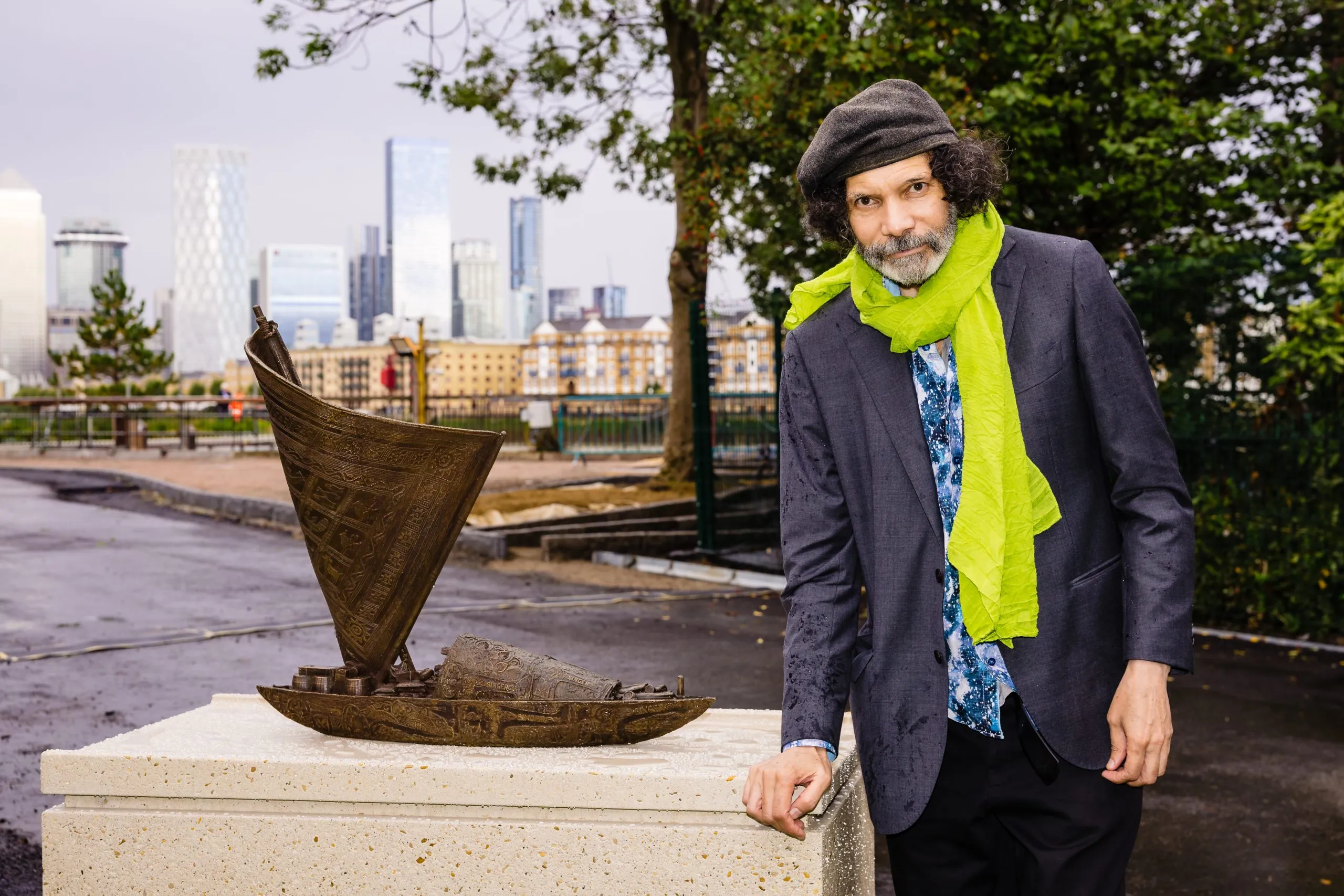
Artist Hew Locke OBE with part of his sculpture Cargoes, a flotilla of six cast bronze boats, installed at King Edward Memorial Park (photo: Danny Loo)
Why did you decide to involve artists as well as designers – and how was this paid for?
With so much of the core engineering below ground, we were struggling to find ways to express the collective, civic and environmental purpose of the scheme in the landscape and architecture. We wanted to celebrate the multifaceted (and sometimes messy) nature of the history of the Thames and its banks through public realm design – in addition to information boards – and find a more creative and engaging way of doing this.
We then invited artists to work with designers to develop integrated works for the sites, with briefs based on historic narratives around the river, under the title ‘Turning to face the river’. The artists were appointed early in the design development stage, ensuring they could work with the contractors and their design team. The level of collaboration was dependent on the level of integration of the artworks. Artists spent considerable time ensuring that artworks were fully coordinated with design information and architecture, landscape and consent packages. The contractors were responsible for the integration and delivery of the artworks.
There was not a ‘per cent for art’ as such but, as part of the Tideway Public Art Commissioning Procurement Plan (2016) and the Public Art Strategy (2017), a range of indicative costs were identified for small, medium, large and extra-large artworks, depending on the scale and nature of the site. These informed the artists’ fees and the indicative fabrication budget allocation, which was reviewed by Tideway as the artworks were developed.
How were the sites picked? Does each mark a specific feature of the sewer infrastructure?
Most sites are located to pick up the flows from a Combined Sewage Overflow – emergency release valves from the old sewage system that allowed it to discharge the sewage directly into the Thames when it was full. Because of the way London’s sewerage system developed, many of our sites are at the confluence of the Thames with one of the so-called ‘lost rivers’ such as the Fleet, Tyburn or Earl Sluice – which acted as London’s original sewers. To tell the stories of these rivers, Dorothea Smartt was commissioned to write a collection of poems, which have been cast into the ventilation columns.
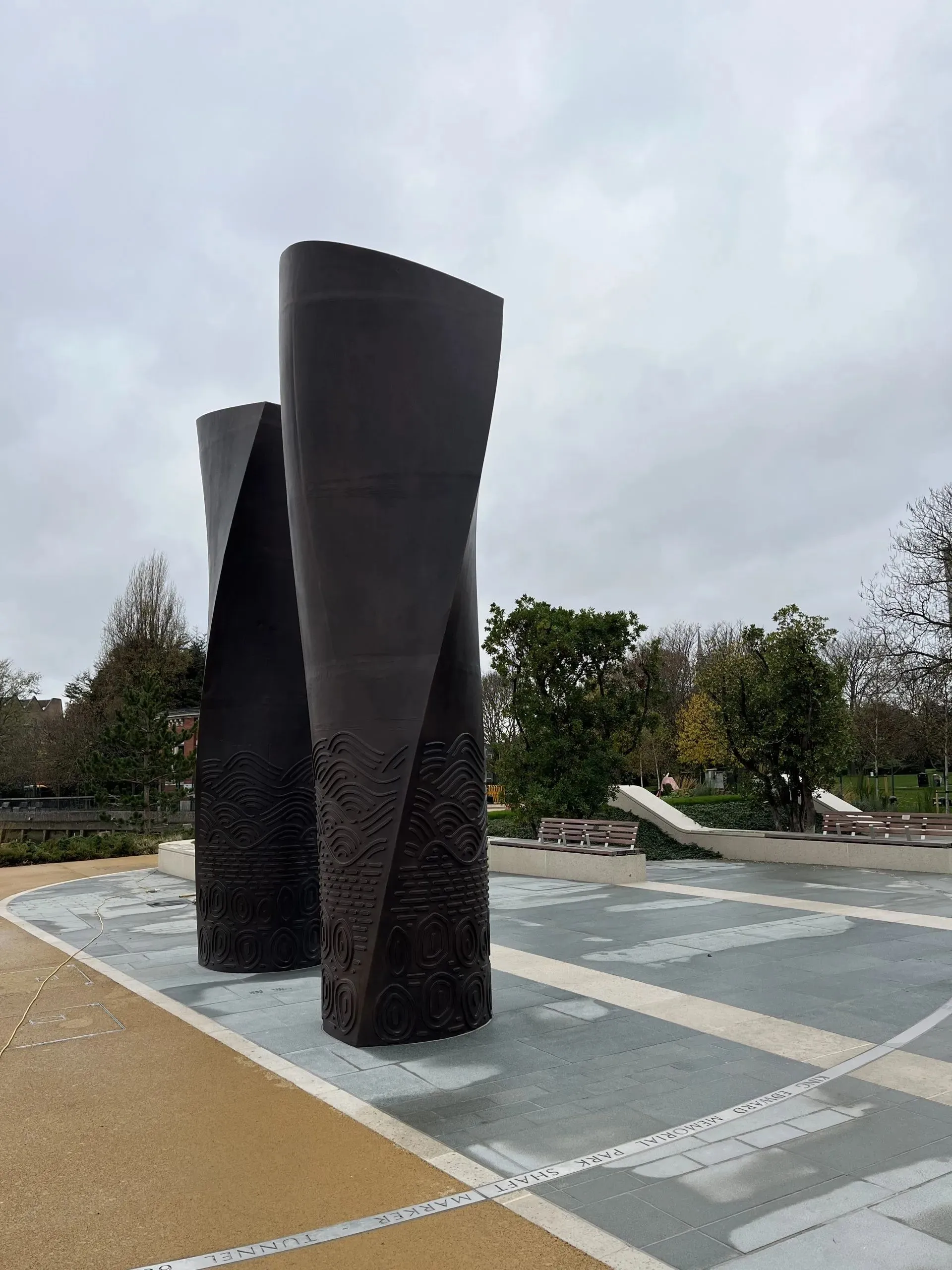
Ventilation columns at King Edward Memorial Park (photo: Bridget Sawyers)
Given 5.8 million tonnes of spoil was removed during tunnelling, was any of this reused for landscaping? What was done with it?
Significant quantities of excavated material from tunnelling was transported by barge downstream for other large environmental projects in the Thames Estuary and to support habitat creation schemes. These included 450,000 tonnes of material used to cap landfill at Rainham and 2.2 million tonnes used to cap ash fields at a historic landfill site at Goshems Farm, Tilbury, reducing the risk of environmental pollution from those sites.
About 1.5 million tonnes was also used at a riverside site next to the Royal Society for the Protection of Birds’ nature reserve at Rainham Marshes to help create new wetlands with a total area of 1km2. That’s already home to a range of species, including lapwing, little ringed plover and redshank.
How were the artists selected? Did they get to choose the sites they worked on?
We consulted widely with stakeholders (including statutory authorities, arts groups and contractors) to agree the commissioning process. Some commissions had open calls, while others involved invited competition, and longlists of artists were drawn up. All of the temporary artworks were via open call. Local authority arts officers were involved in drafting the briefs and participated in the selection process. For each site, three artists were shortlisted and provided with an honorarium, briefings and site visits, to develop a proposal to present to the selection panel.
Tideway briefed, selected and commissioned the artists. The contractors and their design teams, then worked with them to agree the final details with the local authorities, develop maintenance costs and the fabrication and installation of the artworks. It was a genuine collaborative process over several years.
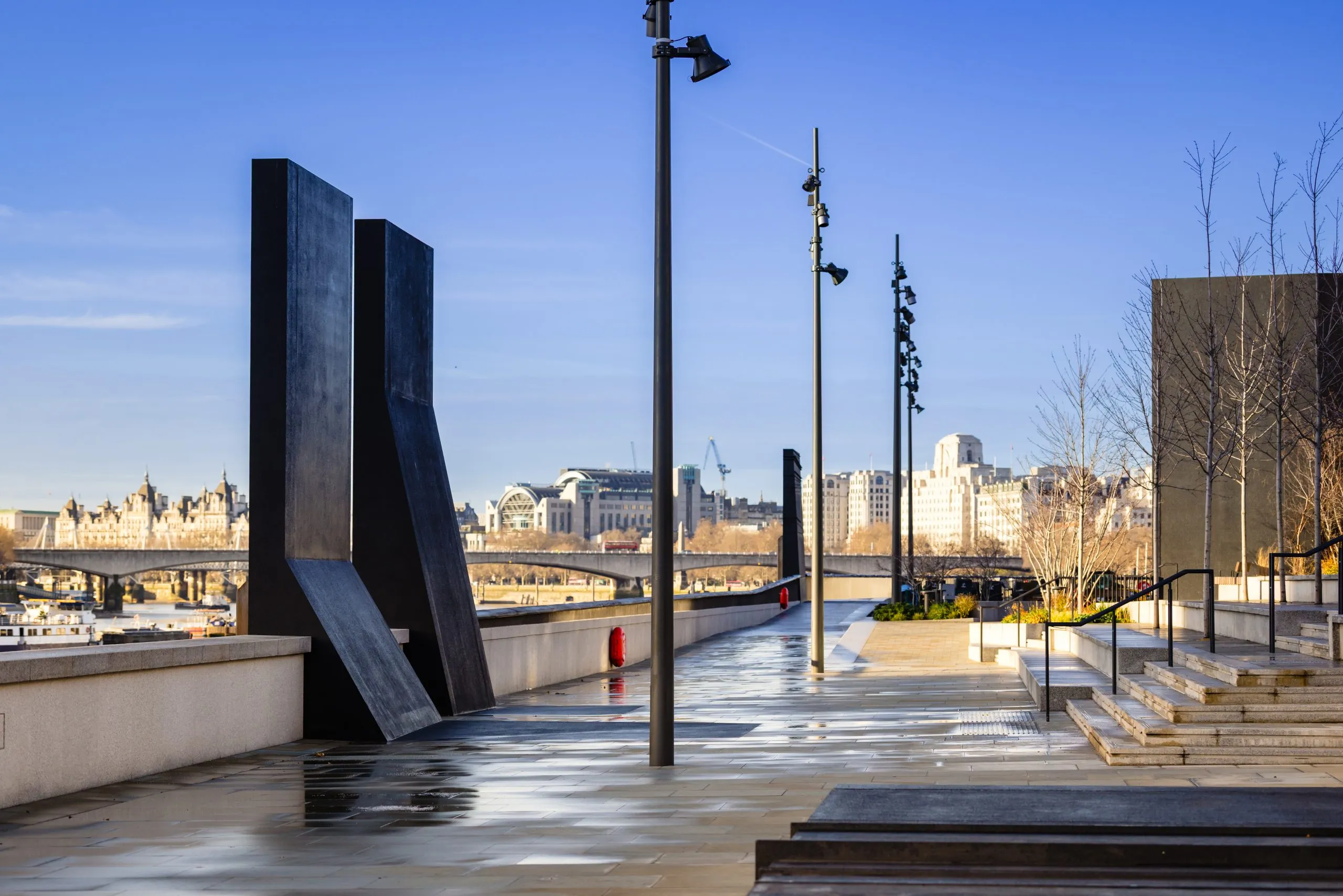
New riverside walkway and sculptures by Nathan Coley at Bazalgette Embankment (photo: Danny Loo)
The art ranges in size from the monumental to the more subtle. How open was the brief?
The Development Consent Order set out requirements for a project-wide heritage interpretation strategy, which Tideway commissioned in consultation with Historic England – defining the historic and cultural themes which would be interpreted through the architectural and landscape designs at each site.
Given the (often abstract) nature of the historic themes, and the project aspiration to provide high-quality, site-specific public realm design, the opportunity was taken to engage with artists to foster exceptional placemaking. A Public Art Strategy was then developed to help articulate the means of engaging with the local communities and broader audiences to deliver this. Through these strategies, the artworks respond to the area’s heritage and a site-specific theme. Artists were asked to respond to this theme, and some chose to do so more directly or literally than others, depending on their individual interests and practice.
Hew Locke’s Cargoes at King Edward Memorial Park resonates with his interest in the languages of historical and contemporary power and how different cultures fashion their identities through visual symbols of authority.
Nathan Coley’s Stages at Bazalgette Embankment reference the monumentality of Bazalgette’s work. His brief was also to work collaboratively with the design team to influence the form and experience of the landscape: so the sculptures are integrated into the river wall, connect levels and form seats and places for reflection, shaping the way in which you move across the site.
Claire Barclay’s work Water finds a level at Putney Embankment responded to a requirement to highlight the location of the Boat Race Marker. Her piece is a bronze strip set into the paving, inscribed with the lines ‘The best leveller is the river we have in common’ and ‘The tide and the wind direct our paths’, reflecting on the Thames as a democratic space shared by all. Inspired by historical voices connected with river labour, rowing and navigation, three cast bronze oars form part of the balustrade handrail.
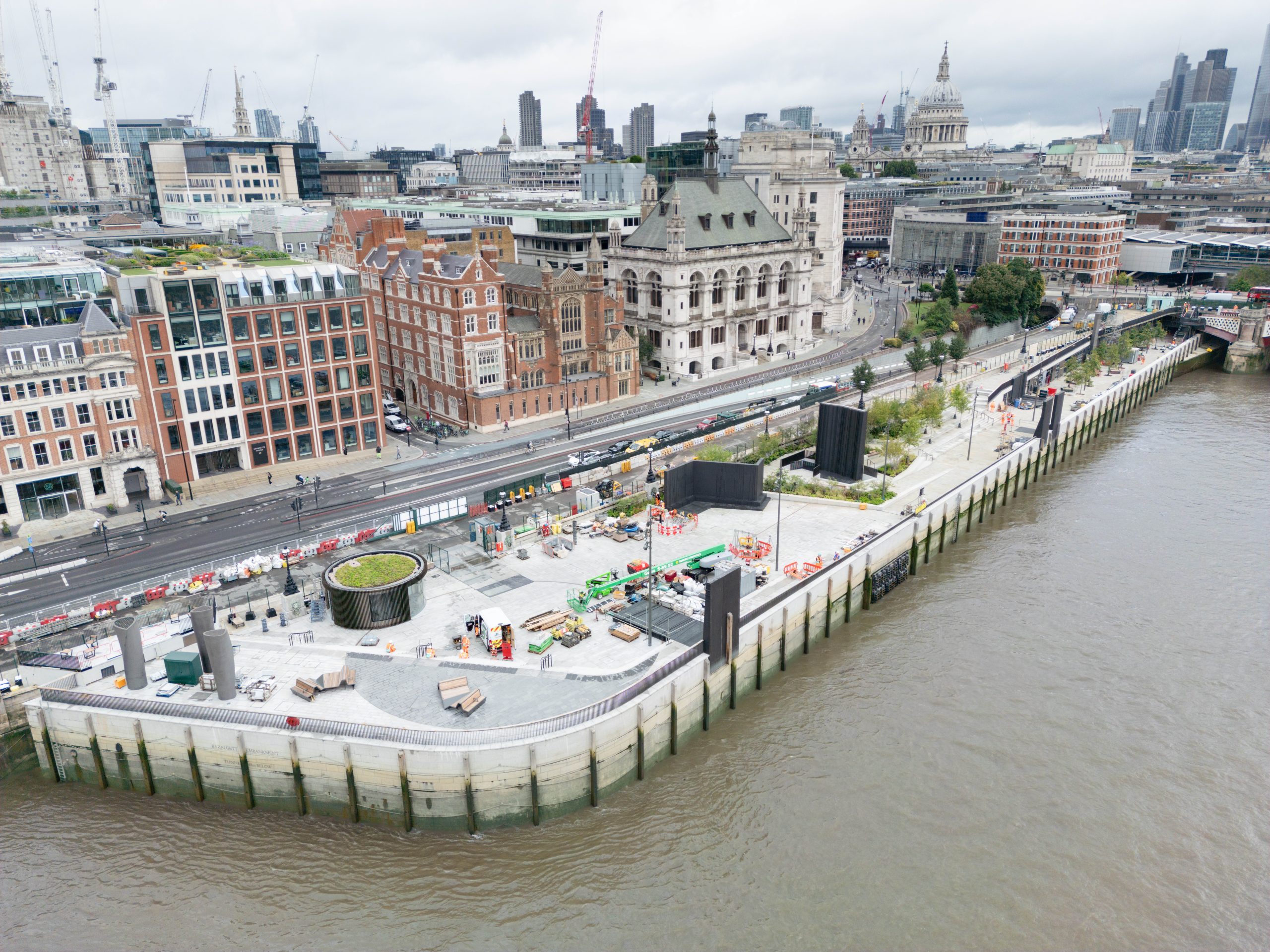
Bazalgette Embankment under construction (photo: Chris Hopkinson)
How was the public engaged in the process?
The project started with several rounds of public consultation prior to the consenting process, which informed the design principles for every site – but sustaining community and stakeholder engagement over the project required consistent effort. Every site had a Community Liaison Working Group, led by an independent chair, who met regularly to be kept informed and involved with the project throughout the construction process.
At King Edward Memorial Park the design team worked closely with the local authority and stakeholders on the detailed design of the landscape scheme. The original children’s playground was permanently relocated prior to construction, and the new playground designed in consultation with the local community.
The artists’ briefs for the temporary hoarding artworks and permanent artworks were informed by multiple stakeholders, internal and external, who also participated in the selection of the artists. Tideway worked with participants over a series of workshops to create the hoarding artwork, a programme of engagement involving 90 public and school artist-led workshops and events and 6,848 people aged from four months to 85 years.
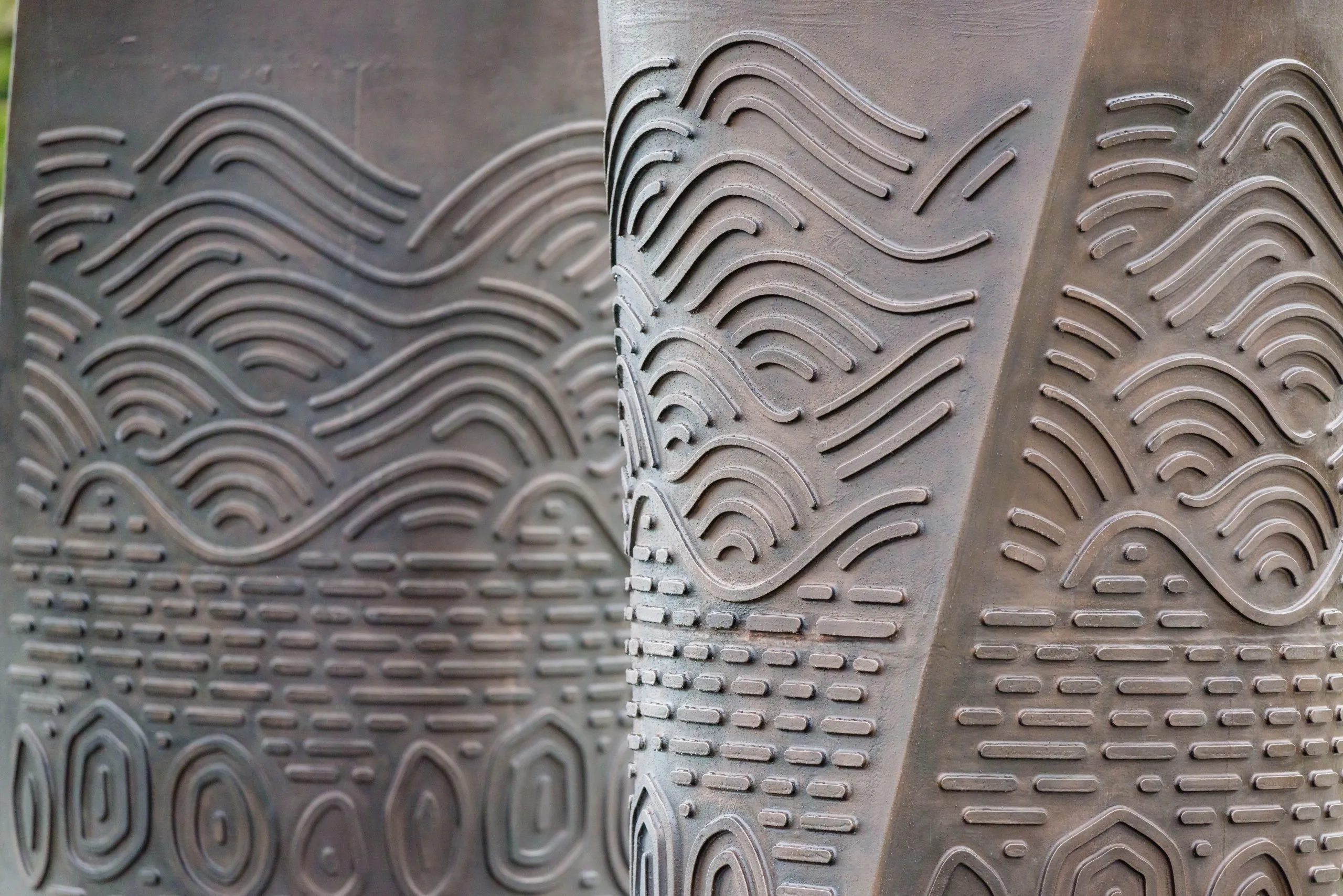
Detail of the engravings on the ventilation columns at King Edward Memorial Park, inspired by the water, foreshore and grilles on the nearby Rotunda building (photo: Danny Loo)
How did you integrate biodiversity into the scheme?
The Thames Tideway Tunnel is an environmental project that will dramatically reduce the volume of combined sewage being discharged into the river. The design teams sought to further enhance biodiversity through the design of the spaces and structures. On the roofs of some above-ground structures – kiosks and raised shafts – we have installed 753m2 of extensive biodiverse, sedum and native wildflower green roofs.
Tideway committed to replanting two trees for every one removed and has planted more than 550 trees in total.
The inter-tidal terraces, which total more than 1000m2 in area on five sites, are at a range of levels between low tide and high tide to offer the widest habitat diversity. There is planting to suit inundation by the river and they include species grown especially for the site, including areas of reed (phragmites species) that is successful elsewhere along the Thames.
The river wall at King Edward Memorial Park is textured concrete with a low PH to encourage the growth of algae. A heavier texture provides small habitat niches, which increase the opportunities for colonisation by plants and invertibrates and promotes a greater diversity of species.
The nature of each site and its location provided different opportunities for improving their respective biodiversity. At Bazalgette Embankment this is achieved via extensive landscaping and at Putney Embankment primarily through textured river walls and a brown roof on the kiosk.
Thames Tideway Tunnel
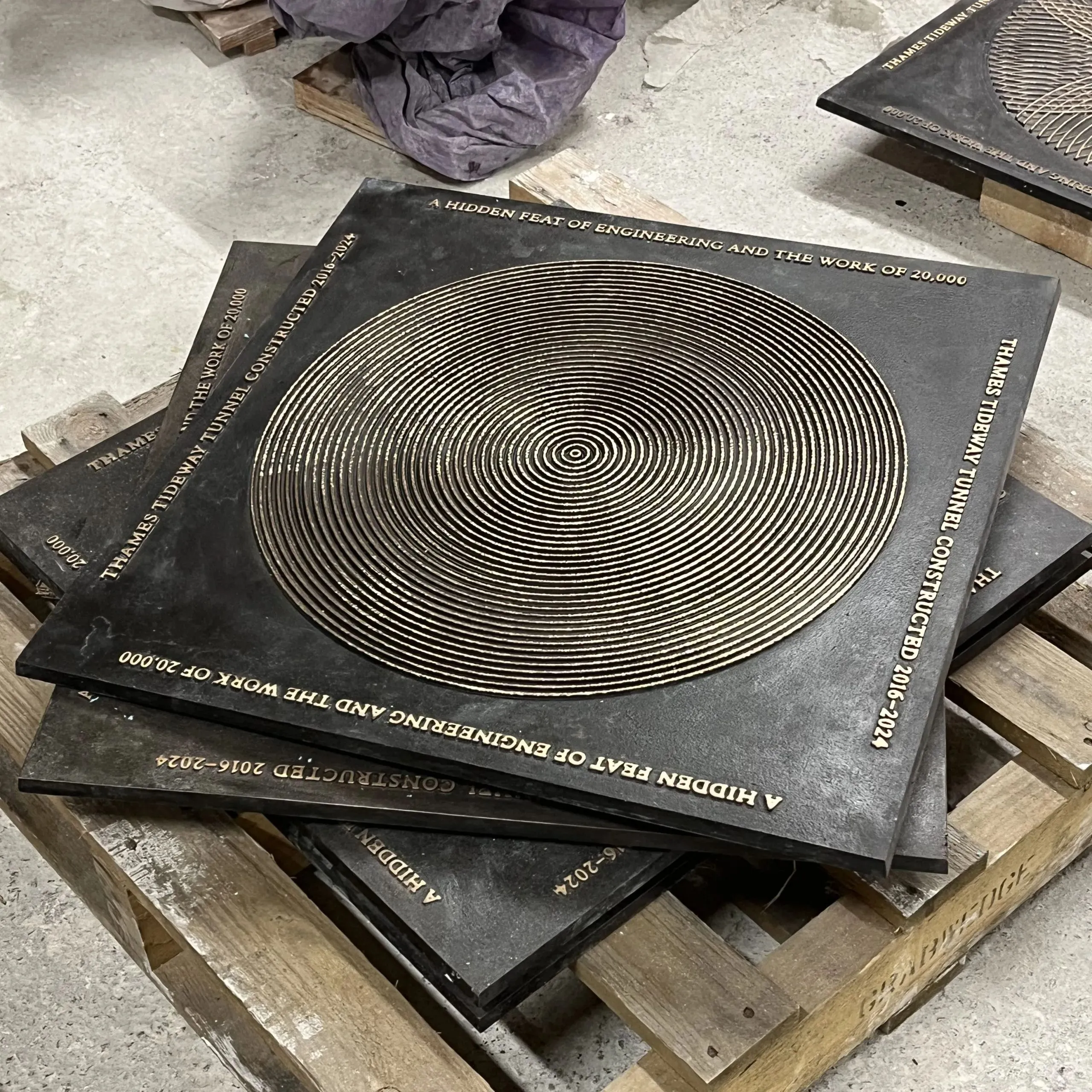
Project-wide cast bronze plaques (photo: Bridget Sawyers)
Fully operational in August 2025, the £4.6 billion Thames Tideway Tunnel project has been one of the largest and most complex civil engineering schemes in the world. The new 25km-long tunnel system starts in Acton, west London, and follows an approximate alignment of the Thames before connecting to the Lee Tunnel at Stratford, east London. The project is a deep-level collect, store and transfer tunnel system for combined sewer overflow control, transferring sewage to Beckton Sewage Treatment Works for treatment and helping improve the health of the tidal River Thames.
Start on site 2016 • Completion 2022 (public realm open spring 2026) • Construction cost £3.8 billion (public realm c£380 million) • Design life 120 years (system), 25-60 years (architectural hardscape) • Client Tideway • Engineer Jacobs • Architect Fereday Pollard & Partners • Landscape architect Arup (pre-consent), Fereday Pollard & Partners (post-consent) • Public art consultant Bridget Sawyers • Programme manager Jacobs • Systems integrator Amey
Putney Embankment
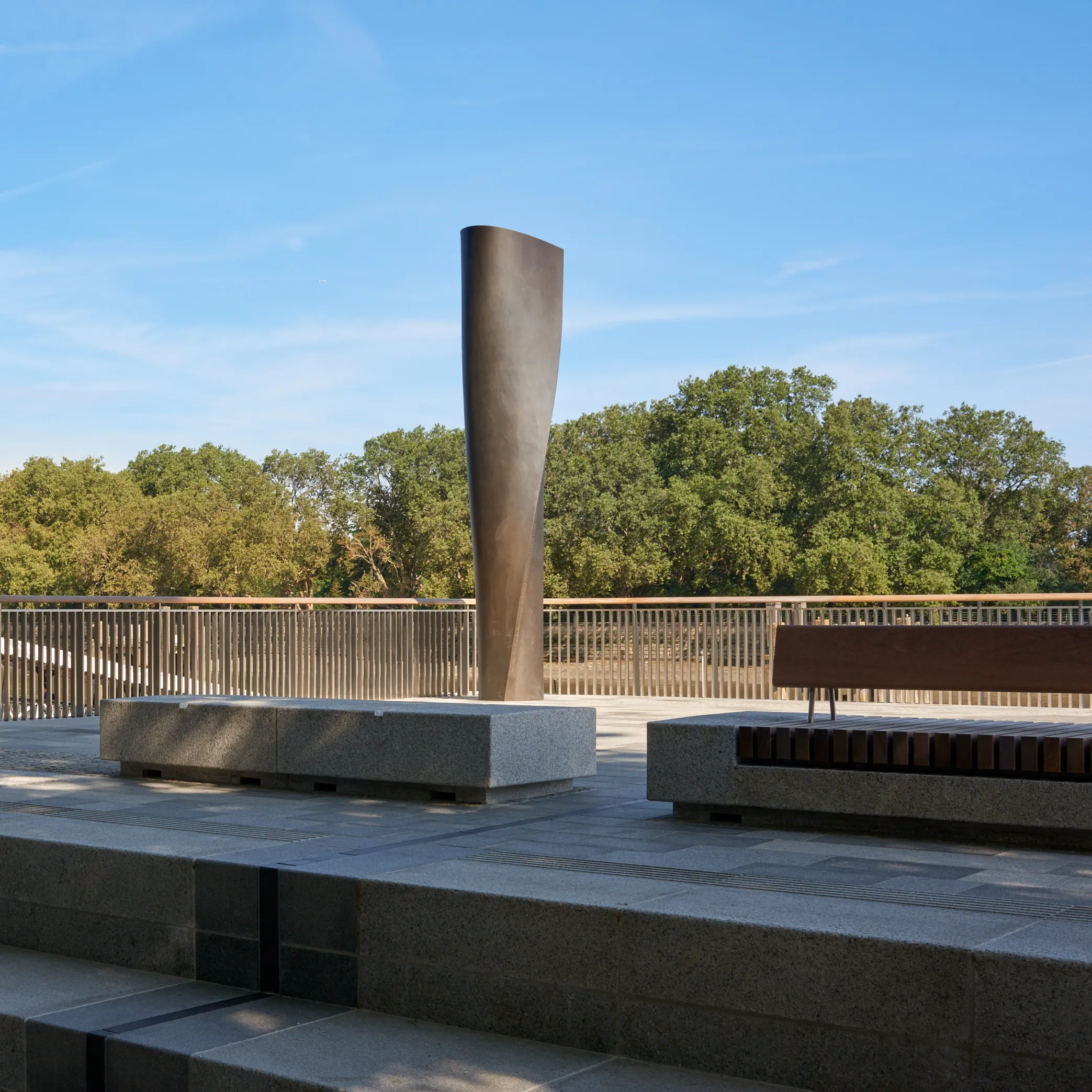
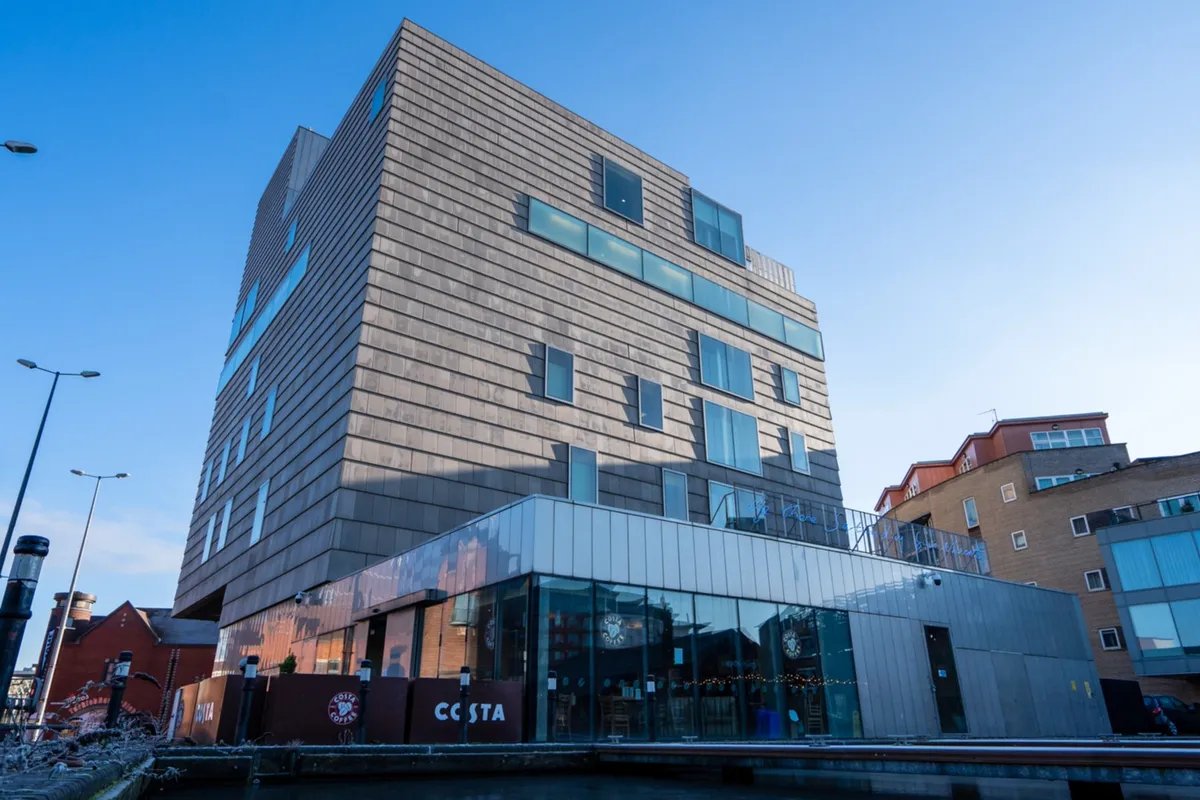
Artwork by Claire Barclay on the kiosk (photo: Jonathan Bassett)
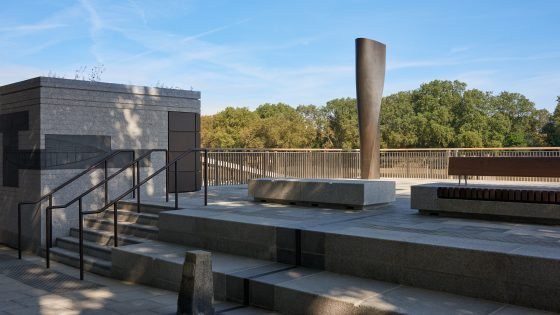
Located west of Putney Bridge, this 590m2 space is located above a 36m-deep shaft and 50m-long tunnel connecting the Combined Sewer Overflow beneath Putney Bridge to the main sewer tunnel. Designed for events with timber seating facing the river, it sits at the starting point of the annual University Boat Race, incorporating the original race marker stone. Granite is used as hard landscape for longevity, with new granite river walls mined from the same quarry as Putney Bridge. A 5.1m-high bronze ventilation column flags the below-ground engineering, while a kiosk and balustrade incorporate artworks by Claire Barclay: the latter bearing a cast of rowing oars forming part of the handrail.
Location Putney Embankment, London Borough of Wandsworth • Start on site April 2016 • Completion September 2023 • Public realm design Atkins (architecture), Arup (landscape) • Artist Claire Barclay • Engineer Arup-Atkins joint venture • System integrator Amey • Main contractor BMB (joint venture between BAM Nuttall, Morgan Sindall and Balfour Beatty)
Bazalgette Embankment
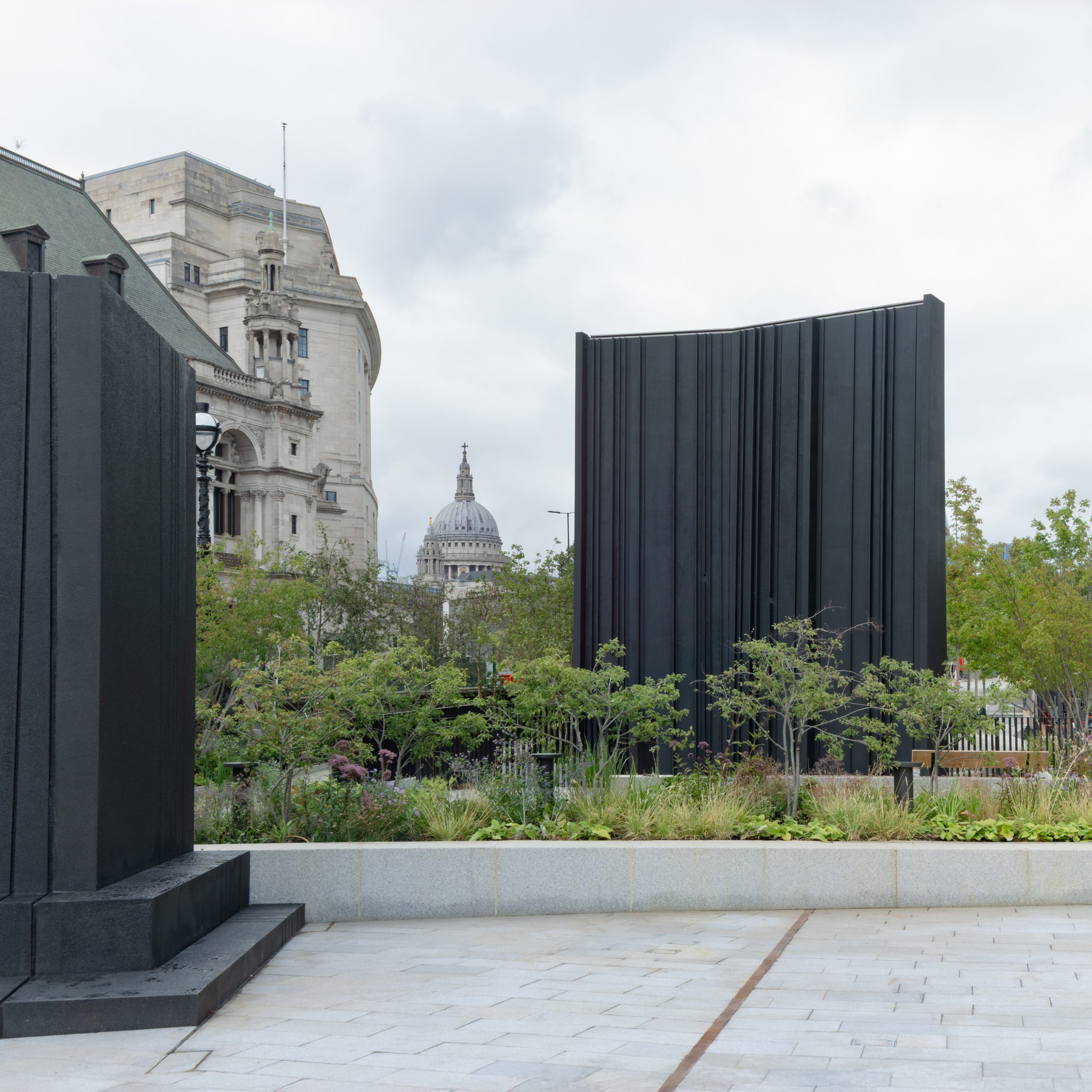
New views of St Paul’s Cathedral from the Bazalgette Embankment framed by the artworks and planting (photo: Chris Hopkinson)
Located below and to the west of Blackfriars Bridge, this is a 5,000m2 110m-long space. It sits above two Combined Sewer Overflows connecting to the main tunnel, which intercept more than 500,000 tonnes of sewage annually. The site provides significant landscaping, including trees, shrubs, grasses and herbaceous plants and ferns and includes public toilets, commercial spaces and a kiosk.
It incorporates the public art Stages by Nathan Coley – five sculptures that range from 4m to 9m high and include a ‘waterwall’. The sculptures are fabricated of bespoke concrete with a black basalt/quartz aggregate in order to appear monolithic.
Location Victoria Embankment, City of London • Start on site April 2016 • Completion January 2026 • Public realm design Hawkins\Brown (architecture RIBA Stages 2-4), Gillespies (landscape Stages 2-4), Orbit (architecture RIBA Stages 5-6), Hyland Edgar Driver (landscape Stages 5-6) • Artist Nathan Coley • Engineer AECOM • System integrator Amey • Main contractor FLO (joint venture between Ferrovial Agroman and Laing O’Rourke)
King Edward Memorial Park
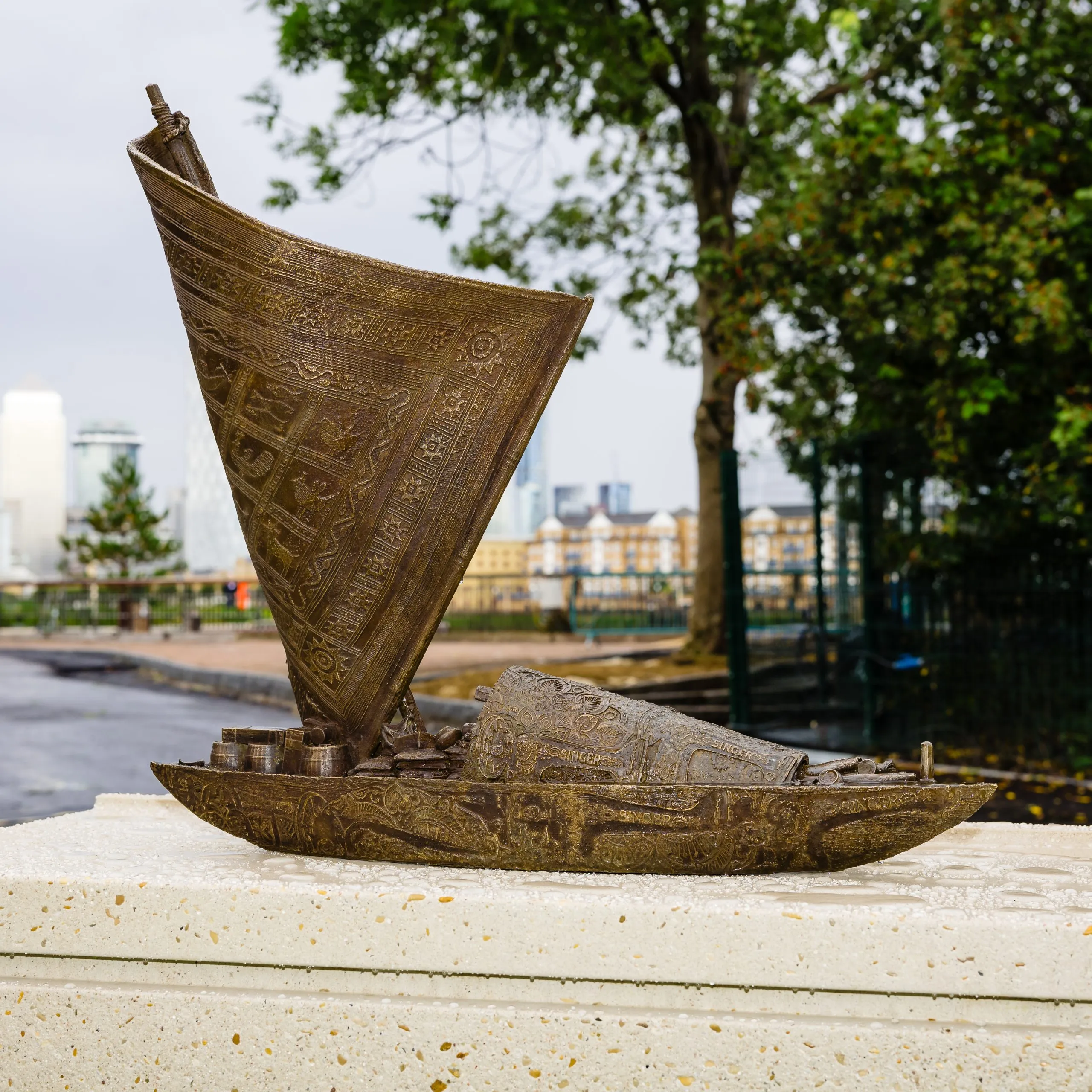
Part of Cargoes by Hew Locke (photo: Danny Loo)
Located to the south of The Highway and east of Shadwell Basin, this new 2,600m2 public space expands King Edward Memorial Park and sits above a 60m-deep drop shaft connecting the North East Storm Relief overflow to the main tunnel. It is designed as floodable public realm, seating terraces and intertidal terrace habitat, with hardwood-clad benches and soft landscaping. Two cast iron ventilation columns mark where the foreshore meets the river, while the sculpture Cargoes by artist Hew Locke OBE, a flotilla of six cast bronze boats, references the history of the river and shifting population of London’s East End.
Location Wapping, London Borough of Tower Hamlets • Start on site April 2016 • Completion Spring 2026 • Public realm design WW+P Architects (architecture RIBA Stages 2-6), Mott MacDonald (landscape Stages 2-5), Hyland Edgar Driver (landscape Stage 6) • Artist Hew Locke • Engineer Mott MacDonald • System integrator Amey • Main contractor CVB (joint venture between Costain, Vinci Construction Grands Projects and Bachy Soletanche)