


An art collective that began in 2001, teamLab now has over 500 members, including animators, programmers, architects, mathematicians and designers. The collective started work on this project “around two or three years ago”, says Kudo. Converting the space from a former amusement arcade took eight months, with a further four or five months to install the artworks.
Their artistic process is trial and error. A group sits in a room together, coming up with concepts and trying them out. Each speciality then tries to solve the problems that arise in their areas of expertise, and the idea evolves from there. There is no hierarchy in the organisation, and much like a joke, Kudo says, if you need to explain it, it’s dead.

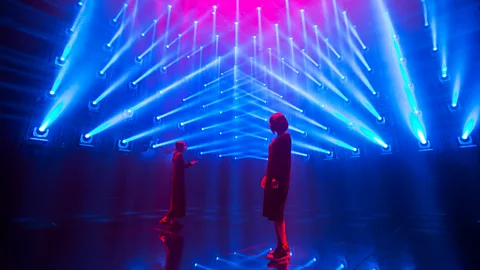 Mori Building Digital Art Museum/teamLab Borderless, 2018, Odaiba, Tokyo
Digital art is inherently complicated, Kudo says, and requires a good deal of manpower behind the scenes to make it work. He uses the development of fine art to illustrate this point. People couldn’t paint outside because paint would dry too quickly, until someone invented the tube to put the paint in, keeping it fresh. With digital art, Kudo explains, “we have to create the brush, and we have to create the tubes, and we have to create the easels by ourselves.”
teamLab has a positive view of humanity and the future. One day, Kudo says, the collective aspires to create a city made entirely of digital art. He reasons that if people could live inside digital art, then they could be more positive towards each other. “Your existence itself becomes one part of the beauty, and if you felt beautiful as part of our artwork, maybe you can feel that beautiful to other people too”.


