[ad_1]
In 2014, Patrick Sun established the Sunpride Foundation with a singular mission: foster and support LGBTQ+ communities and help shape a more equitable world through art. In the more than decade since was first created, Sunpride Foundation has helped bring to life numerous exhibitions and platform a diverse range of artists. At the forefront of these endeavors has been the foundation’s “Spectrosynthesis” series of exhibitions, which have been staged across Asia in collaboration with renowned institutions—from the Museum of Contemporary Art, Taipei, to the Bangkok Art and Culture Centre. Now, the series has debuted its newest iteration “Spectrosynthesis Seoul,” held at Seoul’s Art Sonje Center and on view through June 28, 2026.
Prior to his work with the Sunpride Foundation, Sun, who is originally from Hong Kong, began his career in real estate development, and later founded and helmed Kinwick Holdings Limited. An active art collector since the late 1980s and champion of LGBTQ+ communities in Hong Kong and Taiwan since the early aughts, the Sunpride Foundation is ultimately a synthesis of his life’s work to date.
In light of the opening of “Spectrosynthesis Seoul,” we reached out to Sun to learn more about the Foundation’s origins—and what he envisions for its future.

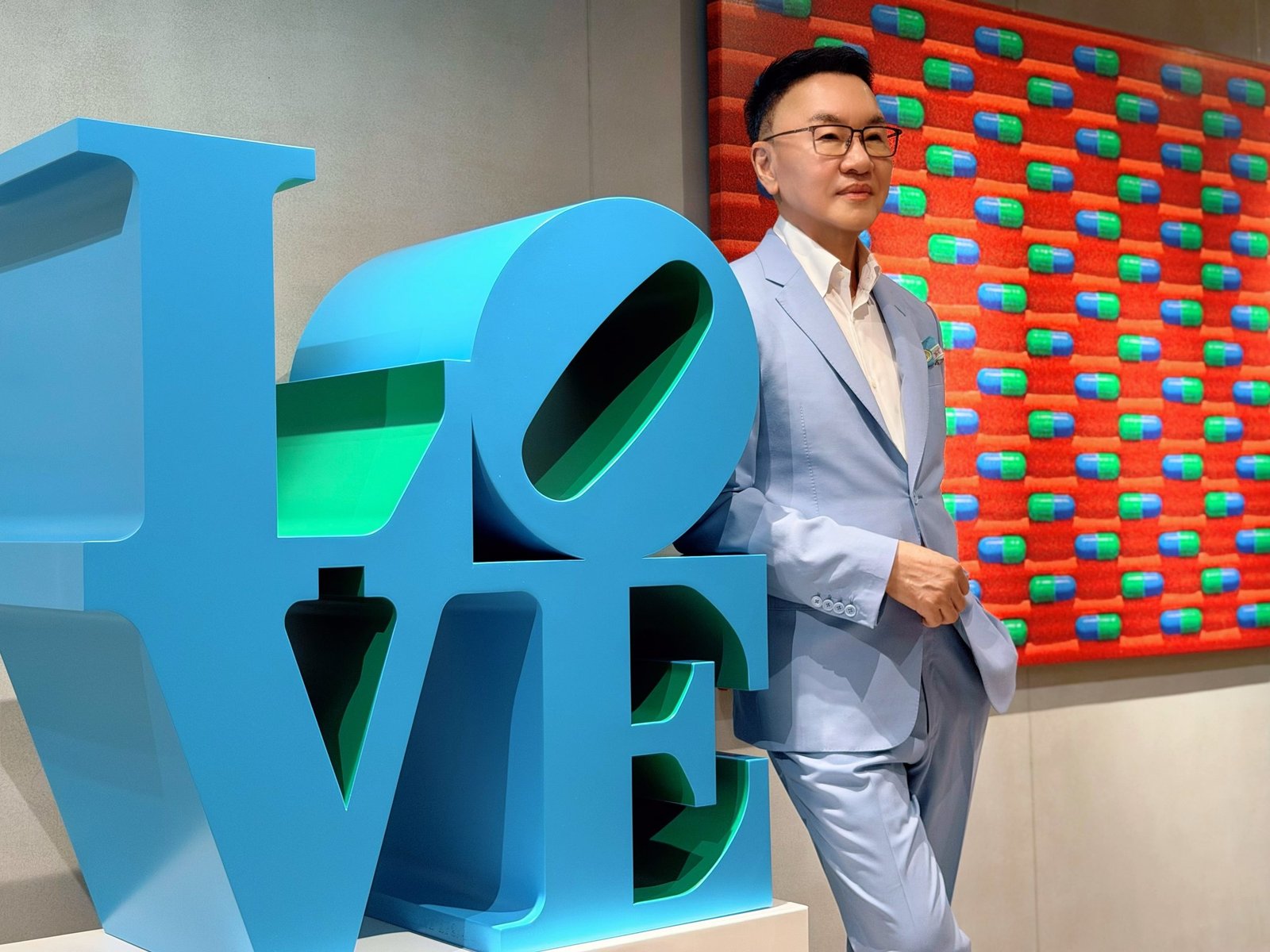
Patrick Sun. Courtesy of the Sunpride Foundation.
With a background in business, can you give us some insight into your experience with art—have you always been interested in the art world and art collecting?
My first experience with art was through traditional Chinese painting. At the time, I worked in Hollywood Road in Hong Kong, a neighborhood famous for antiques and curios. I frequented the shops hoping to buy property from my neighbors, but apparently they were much better businessmen than I was—they sold me paintings instead.
Over time, my interest shifted towards contemporary art because it feels more relevant to my daily life. In 2014, I decided to collect contemporary art with a focus on queer Asian art, and that is how the Sunpride Foundation was started.

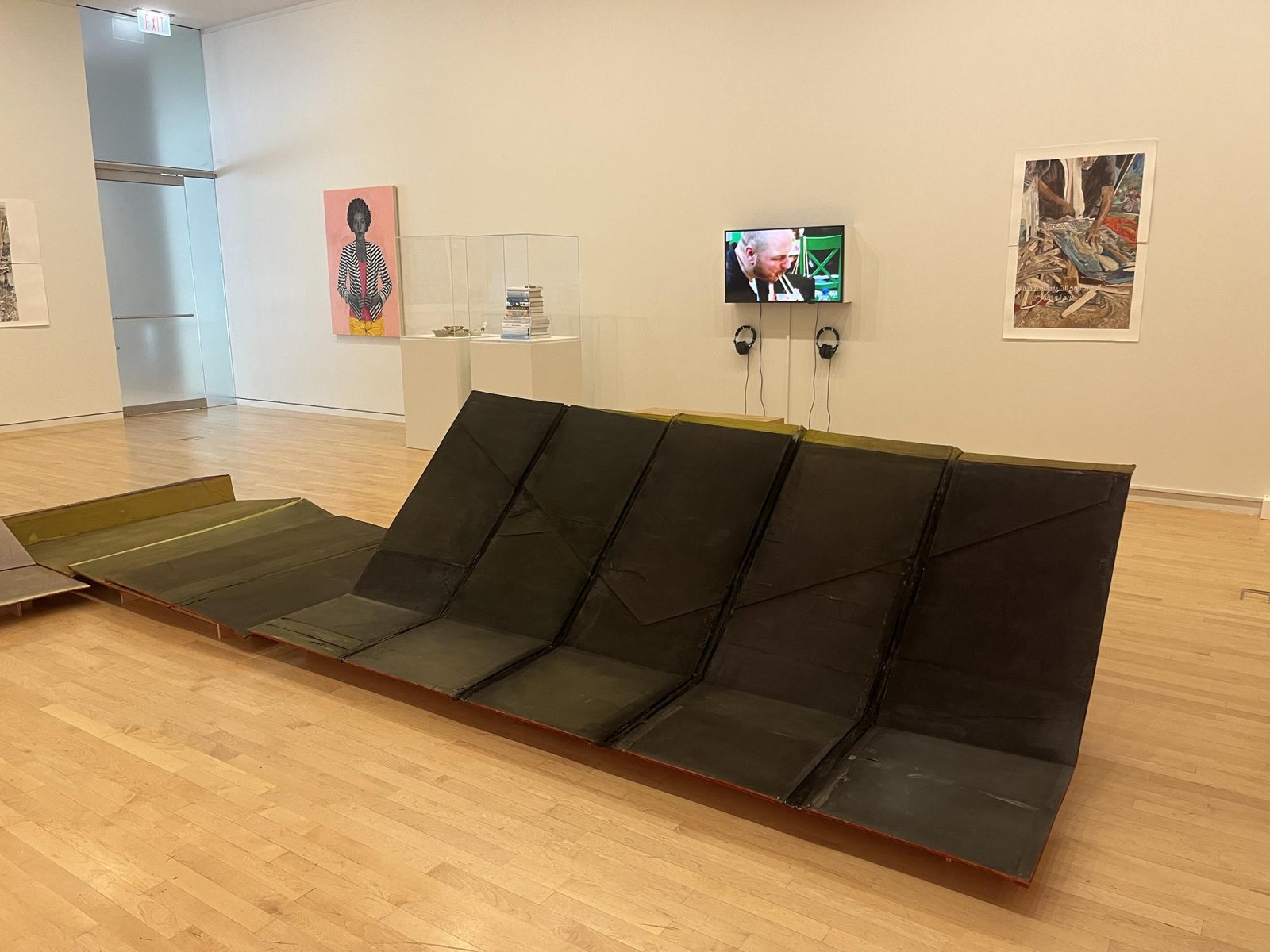
Installation view of “Spectrosynthesis Seoul” (2026). Photo: Seowon Nam. Courtesy of Art Sonje Center.
On a personal level, what was the initial inspiration behind establishing the Sunpride Foundation?
I had long supported the LGBTQ+ community, and with my interest in contemporary art, I thought: why not combine my two passions? Dr. Uli Sigg gave me practical and invaluable advice, which led to the establishment of the Sunpride Foundation.
But if we talk about initial inspiration, it goes much earlier than that. Leslie Cheung, a famous actor in Hong Kong, appeared on a talk show and casually mentioned his relationship with his same-sex partner. I believe that single action had more profound effects on the public than years of street protest. It taught me that people’s perspectives can be changed in different ways, with art being a powerful tool alongside novels, movies, and activism.

Inhwan Oh, detail of Where He Meets in Seoul (2020). Courtesy of the artist.
How does Sunpride Foundation set itself apart from other foundations and initiatives, either operationally or how it builds its collection?
I think there are two main differences: our focus on the LGBTQ+ community and our strategy of collecting for exhibition. Operationally, it is more of a team effort, with less involvement of personal preferences. The first question we ask when looking at a potential acquisition is: “How would this work in an eventual queer art exhibition at a museum?”
At the beginning, it was difficult to identify suitable works, but we have been very lucky that many people believe in our cause and helped us along the way—pointing out artists, curators, and institutions we should work with. That is how one door after another opened for us.

Installation view of “Spectrosynthesis Seoul” (2026). Photo: Seowon Nam. Courtesy of Art Sonje Center.
Can you walk us through the origins of the “Spectrosynthesis” exhibition series? How would you describe its mission or ethos?
The title “Spectrosynthesis” combines two words: “spectrum,” which represents diversity, and “photosynthesis,” referencing the creation of energy from sunlight. It represents our wish to foster a stronger and healthier world through embracing diversity and inclusivity, like multiple sources of light.
“Spectrosynthesis I” at the Museum of Contemporary Art, Taipei, in 2017 was a landmark event—the first major LGBTQ+-themed exhibition held at a government-run museum in Asia. “Spectrosynthesis II” at Bangkok Art and Culture Centre expanded representation with 59 artists from 15 countries and territories. “Spectrosynthesis III” at Tai Kwun Contemporary in Hong Kong explored queer mythologies and historical invisibility at a moment when the city was emerging from political unrest and COVID-19, offering reassurance that Hong Kong could maintain its unique character as a cultural hub where diverse voices could find a platform.

Sin Wai Kin, ESSENCE (film still) (2024). Courtesy of the artist.
With the newest iteration, “Spectrosynthesis Seoul” now on view, can you tell us a bit about the exhibition in your own words? Are there any sections or works in the show that you would consider your favorites?
This is my most anticipated chapter so far, with the largest number of artists involved, taking place in a society often considered more conservative. Co-curated by Sunjung Kim and Yongwoo Lee, the exhibition features 74 artists and collectives, of which nearly 50 are from Korea—showing that the conversation around queerness is authentically Korean. An example here is the body of works by Kang Seung Lee which illustrates how the stories and histories of the LGBTQ+ community are often omitted, distorted, or simply erased.
Many of the participating artists are also young, bringing their unique perspectives that I find truly illuminating. I am particularly impressed by works by Yagwang, Haneyl Choi and Dew Kim that embrace the instability, incompleteness and vulnerability of being queer.
This fourth iteration is also the first time non-Asian artists are included, and we have overseas artists like Mark Bradford, who created a site-specific work titled Nadir (2026), referencing the lowest point in gay and Black history.

Installation view of “Dew Kim: Dear Fear” (2020) at out_sight, Seoul. Photo: Junyoung Cho. Courtesy of the artist.
What do you envision for the future of Sunpride Foundation? Do you see its scope or objectives evolving or expanding?
We shall keep our focus within Asia— and there is much work still to be done. While some countries are legally prohibitive for presenting a show with this theme at the moment, I remain optimistic, as we have seen how laws can change practically overnight in Singapore and India.
The series “Spectrosynthesis” will continue, and I am delighted to share that the next iteration will open at the Museum of Contemporary Art Tokyo (MOT) in February 2027.
“Spectrosynthesis Seoul” is on view at the Art Sonje Center, 87 Yulgok-ro 3-gil, Jongno-gu, Seoul, South Korea, through June 28, 2026.
[ad_2]
Source link