[ad_1]
An exhibition of the paintings of Roger Fry and his overlooked wife Helen Coombe at the Museum of Somerset sheds light onto their complex lives and profound careers, and highlights the importance of bringing significant cultural experiences to Somerset
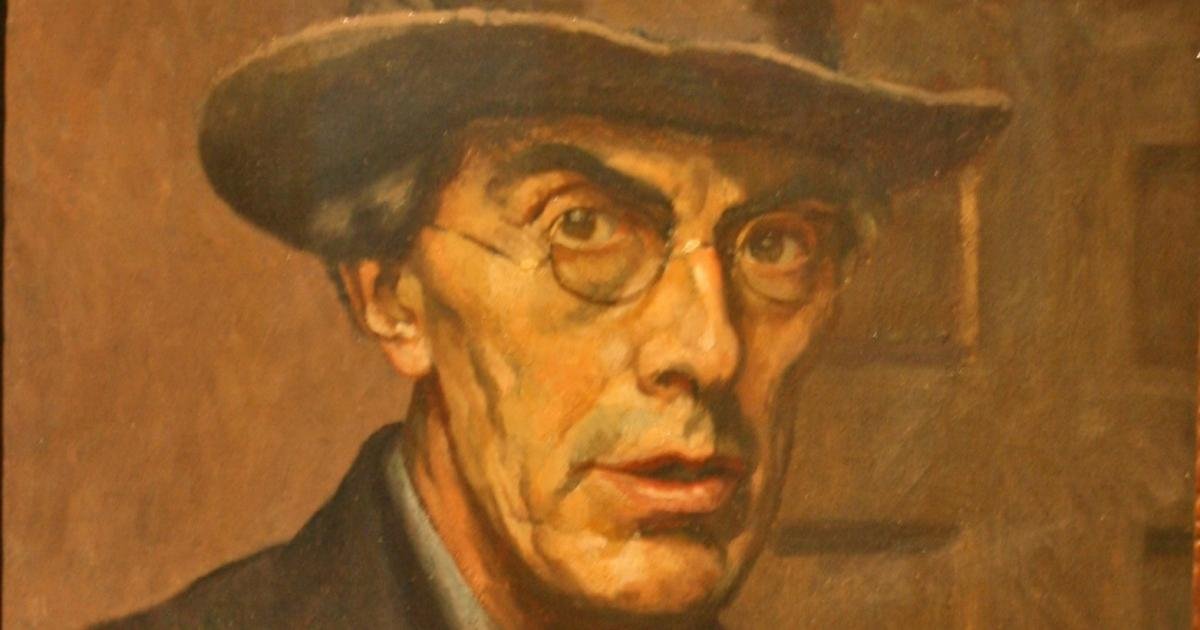
‘Roger was complex and unique,’ explains Tim Martin, curator of A Life in Art: Roger Fry, an exhibition dedicated to the creative output of acclaimed art critic, curator and writer Roger Fry which is underway at the Museum of Somerset. It’s a statement made with considerable knowledge and compassion for an individual credited with bringing post-impressionism to England, but whose private world was far from straightforward.

A descendant of the Bristol Fry’s Chocolate dynasty and born in 1866 as one of nine children to a wealthy Quaker family in London’s Highgate, Roger Fry’s educated upbringing and exposure to freethinking while studying natural science at Cambridge created fertile ground for the development of an enquiring mind. Fry would go on to bring revolutionary ideas about art back from the continent in the early 20th century and become influential in the opinions and activities of the Bloomsbury Group.
Charleston, the wartime refuge of Bloomsbury Group cornerstone Vanessa Bell and conscientious objectors Duncan Grant and his partner David Garnett, recently held the first major exhibition in over 25 years dedicated to Roger Fry as an artist. The Museum of Somerset will be welcoming nearly 40 of Fry’s paintings from the Charleston show as well as placing the oft sidelined life of his wife, the Arts & Crafts artist Helen Coombe, at the centre, displaying some of her own artwork alongside a film pieced together from archive photos depicting them both.

‘It’s a sensitive story but we should talk about it – it happened,’ says Tim, alluding to Helen Coombe’s permanent commitment, in her mid-40s, to The Retreat in York as the result of deteriorating mental health following two earlier admissions to The Priory. ‘She was a talented and intellectual woman who sadly became unwell,’ states Tim. Helen’s removal from society in 1910, 14 years after her marriage to Roger Fry, coincided with Fry meeting Vanessa and Clive Bell, as well as his groundbreaking exhibition Manet and the Post-Impressionists at the Grafton Galleries, London.
The first gallery in England to bring the works of Gauguin, Cézanne, Matisse and Van Gogh – among others – to the public’s attention, the exhibition initially caused shockwaves, radically challenging the established tastes of the period. It would be followed by a second exhibition in 1912, after which Fry established design enterprise the Omega Workshops with Vanessa Bell and Grant, in which decorative pieces by his wife were in fact displayed. ‘She did fit into the Bloomsbury Group,’ affirms Tim. ‘Roger kept her work alive. I’ve changed my opinion of him as I’ve researched.’

The Museum of Somerset will be placing further emphasis on Roger and Helen Fry’s personal story through photos from private family collections showing times they spent at Failand House near Bristol. Purchased by Roger Fry’s parents during his childhood and used as a summer house for the large family, Fry would later spend time there with Helen during the earlier years of their marriage and with their children, Julian and Pamela. He would go on to raise them with the help of his sister Joan Fry, a peace campaigner and social reformer.
‘They were all extraordinary, talented people,’ notes Tim of Roger Fry’s siblings, which also included Margery Fry, a prison reformer and one of the first female magistrates, and Agnes Fry, a botanist, astronomer, illustrator, writer and poet. Agnes donated Failand House to the National Trust in 1958, although it is no longer in its care (nearby Tyntesfield remains so). Fry’s scholarly and philosophical roots may well have prompted Virginia Woolf – tasked with writing Fry’s biography following his untimely death from a fall aged 67 – to comment: ‘He had more knowledge and experience than the rest of us put together.’

More widely known as a thought leader within the art world (he was appointed curator of paintings at the Metropolitan Museum of Art in New York in 1906) than as an artist, the Museum of Somerset, like Charleston, will be celebrating Roger Fry’s considerable oeuvre of portraits, landscapes and still life paintings. ‘He had a very interesting life, he turned down being the director of the Tate,’ reflects Tim. ‘He was more known as an art critic, curator and writer, but he wanted to be considered an artist of taste.’
‘A lot of people say you can’t do both,’ adds Tim, who is himself both a practising artist (concerned with the natural world and man’s relationship to it) and curator, and conscious of the demands of both fields. ‘He was one of those artists who got inspired as he went through life,’ remarks Tim. ‘It was accepted that he was learning from the masters.’ Tim cites the influence of French and Italian art, the result of Roger Fry’s post-university studies in Paris and Italy and extensive travels in Europe throughout his career, on the landscapes he composed. ‘He was obviously very talented.’

Roger Fry’s portrait subjects included Vanessa Bell, his most frequent sitter, with whom he had a relationship following Helen’s departure to The Retreat. The artist Nina Hamnett, another romantic connection, also features, as does his sister Margery. The Museum of Somerset exhibition will include a drawing Fry made of his wife alongside drawings and sketches of Helen’s. ‘It’s possibly the first time her work has been seen since she was exhibiting prior to her institutionalisation,’ discloses Tim. ‘It’s a different kind of show, looped in with Helen and her story and the Somerset links.’
A Life in Art: Roger Fry is part of an ongoing drive by the South West Heritage Trust, which runs the museum, to bring exhibitions of national calibre to Somerset, working in partnership with major national art organisations such as the Tate. ‘This exhibition is further expression of our mission to bring great art to Somerset, ensuring people across the county can enjoy high‑quality cultural experiences close to home,’ explains exhibitions manager Mel Coussens. ‘We’ve seen time and again how warmly our previous exhibitions have been welcomed by visitors, and this show builds on that momentum.’

The Museum of Somerset has previously hosted loaned works by Alexander Hollweg, John Martin and William Scott. As well as being proud to display such notable artists, it is also committed to developing a programme exploring Somerset’s heritage, all the while keeping visitors’ interests at heart. ‘A first‑of‑its‑kind study by Art Fund provides the most compelling scientific evidence to date that viewing art delivers immediate, measurable benefits for our health and wellbeing,’ attests Mel. ‘We hope this exhibition will not only inspire and delight audiences but also offer a meaningful opportunity for reflection and connection.’ Placing Helen Coombe prominently within the exhibition underlines the point and helps create an uncensored and fully formed view of the life of Roger Fry, whose considerable contributions to the trajectory of modern art in Britain and its wider discourses might otherwise overshadow the nuanced life of a creative soul and deep thinker.
‘In so far as taste can be changed by one man, it was changed by Roger Fry,’ said the art historian Kenneth Clark famously. A Life in Art: Roger Fry explores both how and why Fry achieved this, offering a modern lens on Virginia Woolf’s ‘iridescent’ man. .
A Life in Art: Roger Fry runs until July 4. museumofsomerset.org.uk
@museumofsomerset
[ad_2]
Source link