[ad_1]
Asia-Pacific Art in London
Art

Express newspaper
15/05/2026 20:06
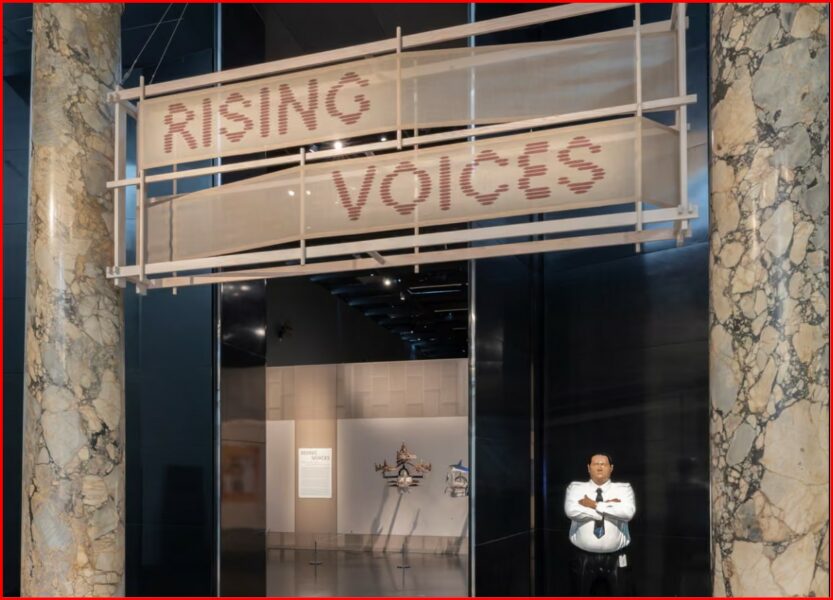
Britain seems to be finally giving contemporary art from the Asia-Pacific region the attention it deserves. One of the latest pieces of evidence is the exhibition “Rising Voices: Contemporary Art from Asia, Australia and the Pacific,” which opened at the Victoria and Albert Museum in South Kensington.
At the museum’s main entrance, visitors are confronted by an unusual figure: a life-size fiberglass sculpture depicting a powerful bodyguard. The work, “Kapa Haka (Whero)” by artist Michael Parekōwhai from Aotearoa, New Zealand, serves as a kind of symbolic guardian for the exhibition.
Rising Voices is a partnership with the Queensland Art Gallery | Gallery of Modern Art in Brisbane and features more than 70 works that have never before been exhibited in the UK. The artists come from 25 countries and have been featured in the Asia Pacific Triennial of Contemporary Art, one of the region’s premier contemporary art events.
The exhibition is part of a wider wave of international collaborations that are bringing works from Australian galleries to major institutions abroad. Last year, Tate Modern presented Emily Kam Kngwarray in collaboration with the National Gallery of Australia, while the National Gallery of Victoria’s exhibition, “The Stars We Do Not See: Australian Indigenous Art,” is currently touring the United States.
Daniel Slater, director of exhibitions at the V&A, says such presentations are long overdue. According to him, the responsibility to bring these works to the British public has been with domestic institutions, but until recently this had not happened.
When it was founded in 1993, the Asia Pacific Triennial was the first major exhibition dedicated exclusively to contemporary art from Asia and the Pacific. Since then, it has attracted more than 4 million visitors to QAGOMA and served as a platform for some of the most renowned names in contemporary art, including Cai Guo-Qiang from China and Lee Bul from South Korea.
Although the triennial has had a major impact in Asia and Australia, this is the first time that a broad selection from its history has been presented in an international exhibition of this kind.
The idea for this exhibition began in 2018, when Slater visited the ninth edition of the APT. He says he couldn’t believe why British institutions weren’t trying to bring this experience to the public in the UK.
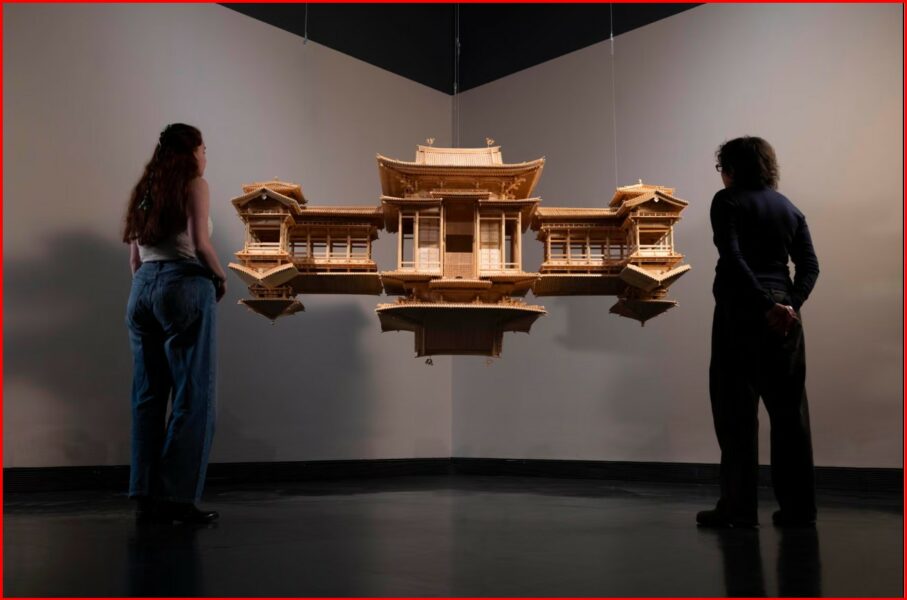
The exhibition was a challenge in itself. For more than two years, conservation specialists at QAGOMA worked to ensure the safe transport of the works to the other side of the world. Among them are the monumental installation “Lotus Sound” by Thai artist Montien Boonma, built from hundreds of terracotta bells; the intricate wooden model of the “Phoenix Pavilion” in Kyoto by Japanese sculptor Takahiro Iwasaki; and fragile works made of feathers, shells, and shark teeth.
The next challenge was to bring together three decades of triennials into a single exhibition. Co-curator Tarun Nagesh of QAGOMA says the main question was how to capture the essence of such a vast project and present it to a whole new audience.
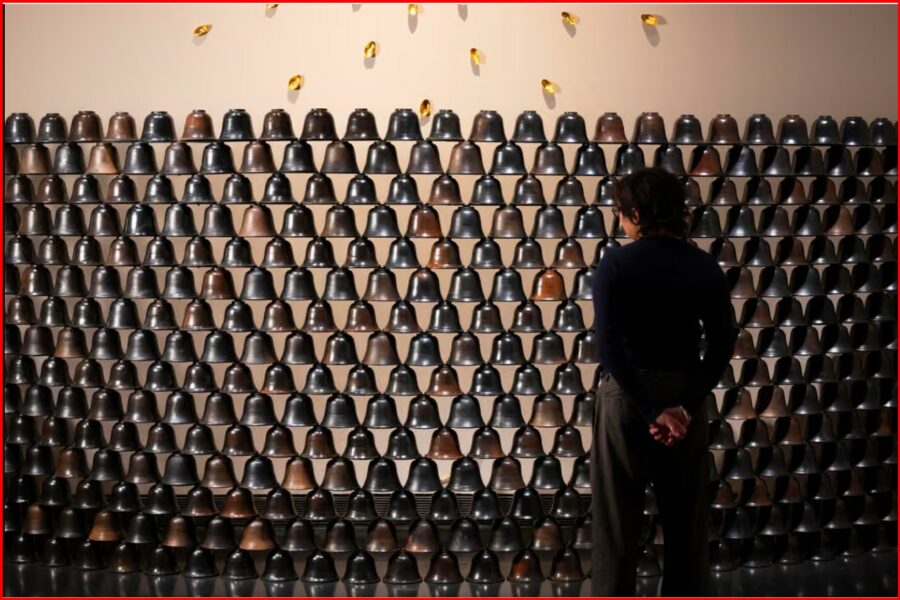
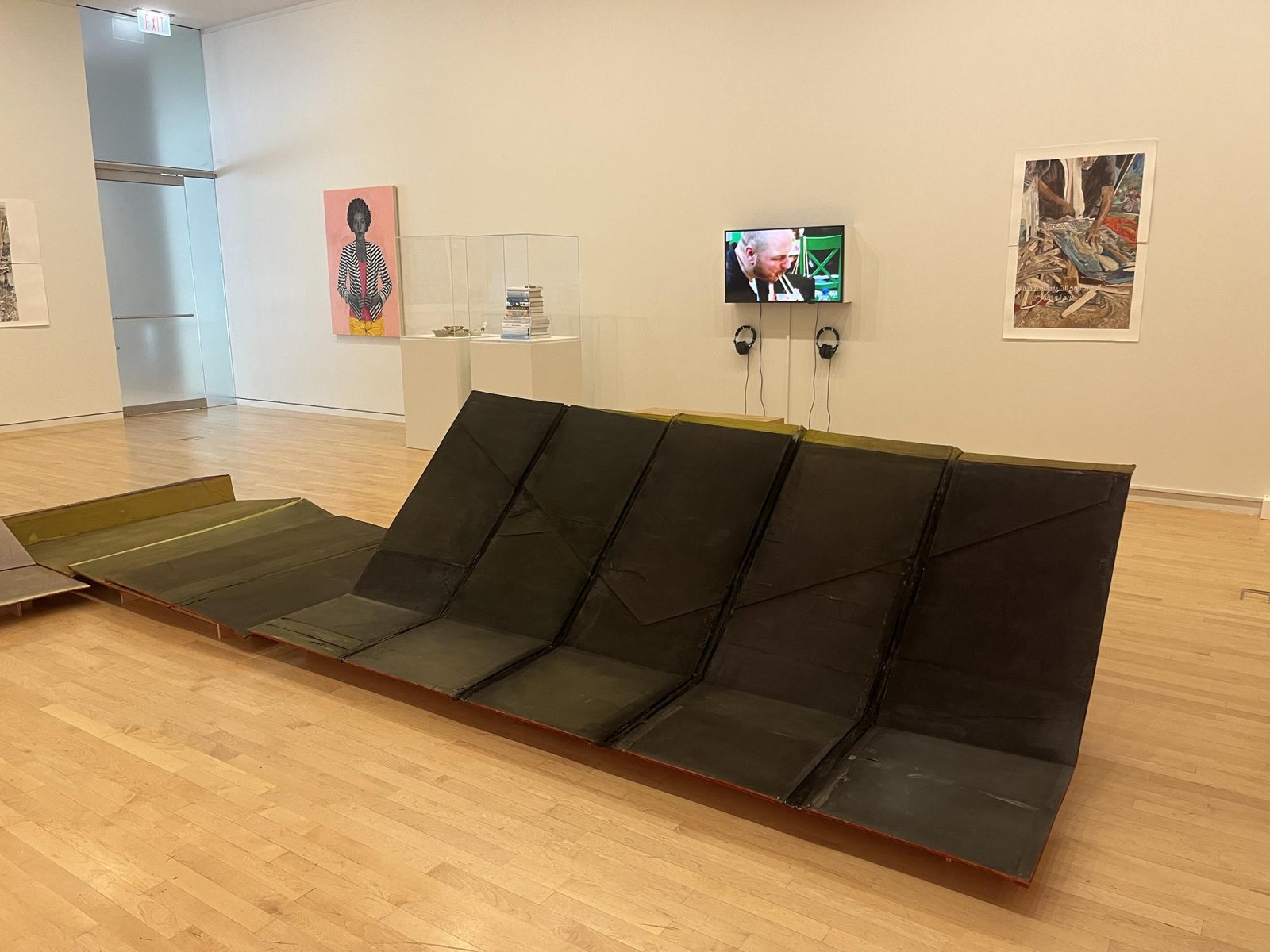
Slater and Nagesh structured the exhibition into four sections. The first space offers the visitor a gentle introduction to the variety of works, through paintings, textiles, videos, and other forms. The exhibition then develops into thematic sections that address politics, materiality, and spirituality.
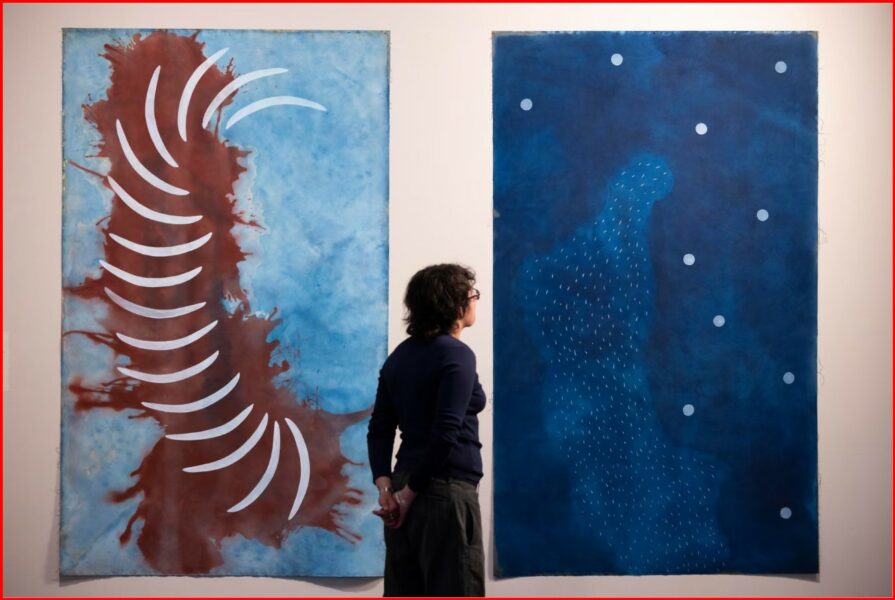
In the entrance space are also two works by Judy Watson, an Aboriginal artist from Waanyi Country in northeastern Australia. Watson was part of the first triennial and has attended almost all of its editions since then.
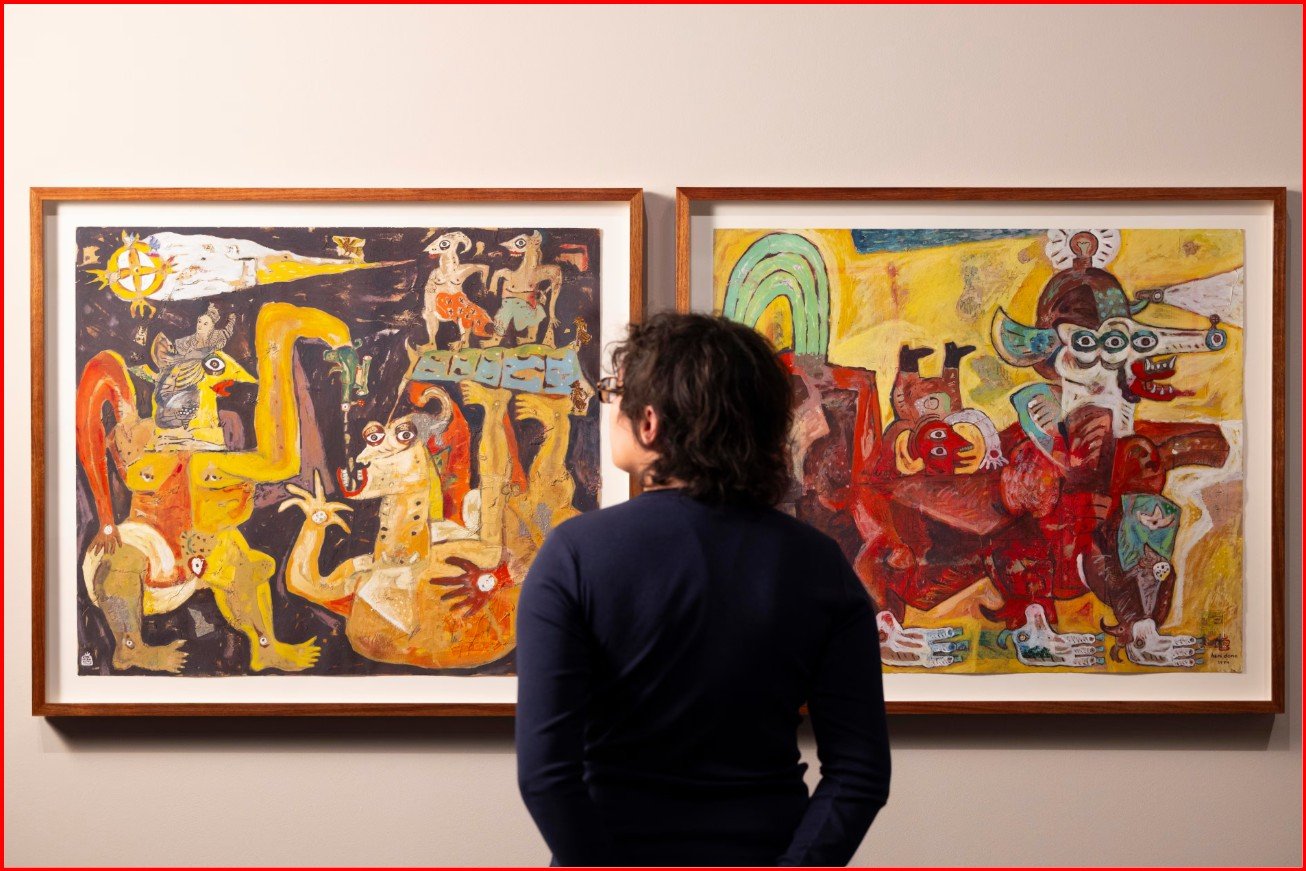
One of her works, “Memory Bones,” features white rib-like shapes on a red stain, symbolizing the broken bones and blood of Mulrunji Doomadgee, an Aboriginal man who died in custody in 2004. The excessive incarceration of Indigenous peoples and the deaths of Aboriginal and Torres Strait Islander people in custody remain a national crisis in Australia.
Watson describes the creation of this work as a process of mourning. According to her, it reflects on the colonial violence that still continues in Australia.
Under the red stain appears a layer of watery blue, referring to the Waanyi land, a territory of springs, streams and rivers. For Watson, blue is the color of memory, water and underground springs; like the idea of memories that run through you.
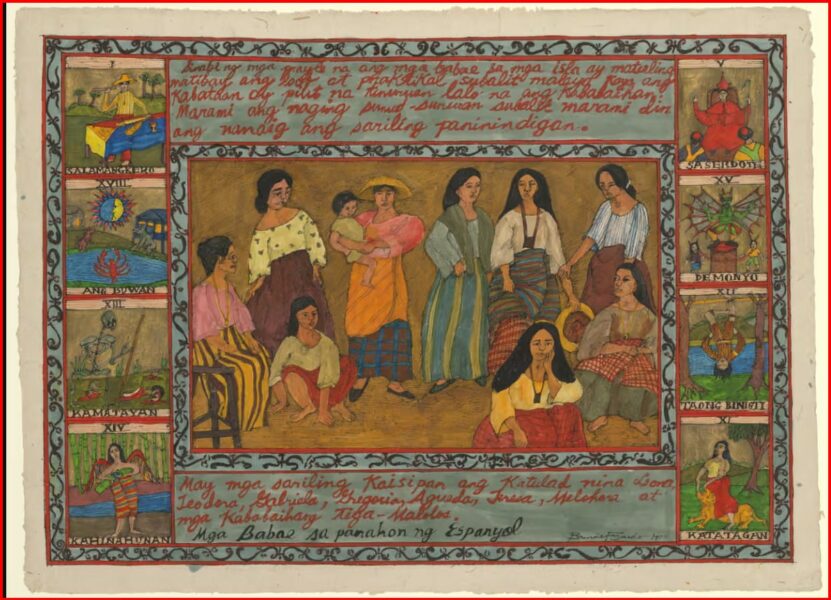
The exhibition also includes other reflections on colonialism. Filipino artist Brenda V Fajardo uses figures inspired by tarot cards to read the history of the Philippines under Spanish and American rule, highlighting the resilience and courage of women.
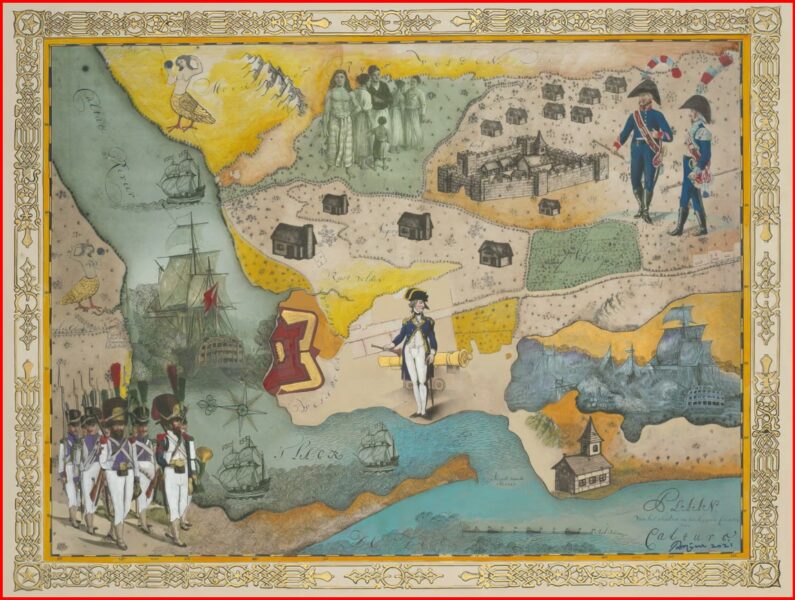
Sri Lankan artist Pala Pothupitiye repurposes colonial maps to show how waves of European imperialism have shaped his country’s art and society. In “Kalutara Fort,” he depicts a fort built by the Portuguese, then taken over by the Dutch and handed over to the British. Today, no trace of the fort remains; a Buddhist shrine stands on its site.
The fact that so many works from former British colonies are on display in London, in a museum that preserves masterpieces of British history and monuments to the monarchy, is itself a challenge to historical hierarchies. The curators hope that visitors will experience this confrontation and make connections between the works in the exhibition and other objects in the museum.
For example, the blue hues in the shell pendants of Tasmanian Aboriginal artist Lola Greeno may bring to mind the sapphires in one of Queen Victoria’s crowns, displayed on the upper floors of the museum.
Slater hopes that the audience will experience the same sense of discovery in “Rising Voices” that he had when he first visited the Asia Pacific Triennial. According to him, the exhibition aims to clearly demonstrate that the history of Asian and Pacific art is not a peripheral history of global art, but an essential part of it. /GazetaExpress/
[ad_2]
Source link