[ad_1]
Not the mere transposition of artistic subjects from canvas to fabric. Art, especially contemporary art, is a source of inspiration for fashion, as well as a way of positioning itself and communicating with a sophisticated audience. “Fashion is constantly looking for new ideas,” explains Tristan Paprocki, a gallery owner who recently landed in Milan from Paris, together with his partner Guido Romero Pierini, opening a new location in the Porta Venezia area. “Every season has to bring out something new: who better than artists to help you? Moreover, it is a way to elevate luxury to a work of art, to gain credibility, to have something unique. In the past, the focus was on established names, now we look to young people to show that we know how to go beyond the commercial aspect, to be forerunners, to indicate who the artists of tomorrow will be – and of course also to support them”. Among the artists represented by the gallery (prices between €5,000 and €20,000, depending on the type of work), many have already worked with brands and designers: for example, Marion Flament or James Rielly. “Pauline Guerrier will make a work in India working with local artisans thanks to Chanel,” Paprocki adds. “We will present it in the Milan gallery in 2027.”
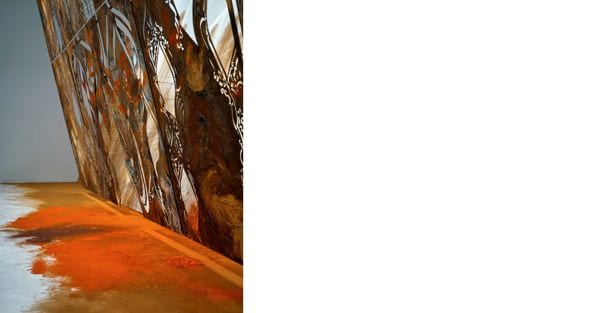
Two years ago, Chanel landed in Berlin, a contemporary art hotspot par excellence, where it started a collaboration with the Hamburger Bahnhof museum to create large-scale installations. The first was entrusted to Czech artist Klára Hosnedlová, with a monumental work on themes of home and everyday life. The second will be Lithuanian artist Lina Lapelytė, who in May will transform the museum into a polyphonic stage for a participatory choreography. By not only looking at established names, fashion is capable of becoming a patron, of discovering (or rediscovering) hidden talents and making them grow. The horizon is truly global: no longer looking only at the West, but the whole world. Chanel also announced ten artists for the third edition of the biennial Next Prize 2026. Among them, the Mexican Bárbara Sánchez-Kane, born in 1987, whose works – woven belts hanging from the walls, latex boots lying on the ground, military uniforms revealing red lace lingerie – are somewhere between clothes and sculptures. Conceived in a society that is still profoundly male chauvinist, they reclaim the political role of clothing and highlight its function of immediate interaction with reality and the construction (or deconstruction) of identity.
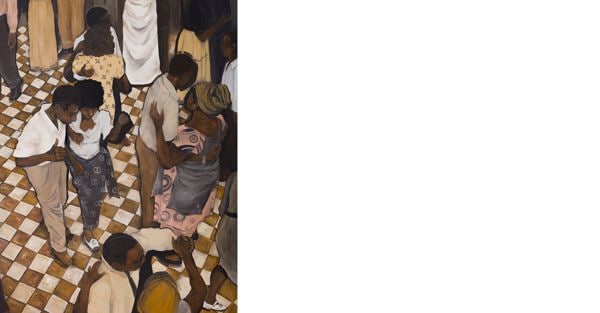
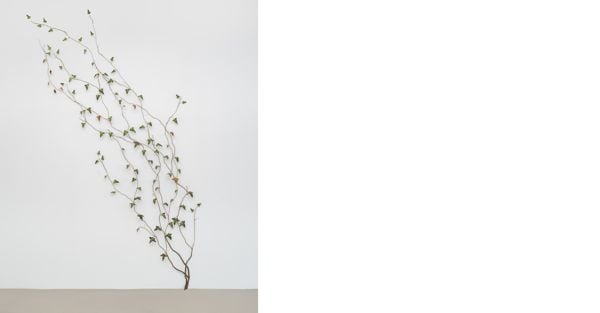
Starting with the New York Fashion Weeks, in 2024 she arrived at the Venice Biennale (at Kurimanzutto, prices range from $4,000 to $75,000). Alongside her, Chanel’s Next Prize has awarded the Chinese Pan Daijing, the Nigerian Emeka Ogboh, the Korean Ayoung Kim, and the Frenchman of Caribbean origin Pol Taburet who, not yet 30 years old, has achieved rapid success for his ability to mix his traditions and references to classical painting. He is currently in Rome to create new works that will be presented at Villa Medici (paintings start at EUR 65,000 at Mendes Wood). Another award-winning artist, Álvaro Urbano, a Madrid-born, Berlin-based artist born in 1983, works at the intersection of art, theatre and architecture, creating immersive, dreamlike environments in which nature invades the exhibition space. His sculptures are painted metal plants that look real, with signs of decay and leaves on the ground (at Chert Lüdde in Berlin, prices range from EUR 10,000 to 120,000. He also had a solo exhibition in the famous Marian Goodman gallery in New York in 2025). The works of the Iranian-born Frenchwoman Chalisée Naamani, like those of Bárbara Sánchez-Kane, also lie on the borderline between richly decorated clothes and contemporary art.
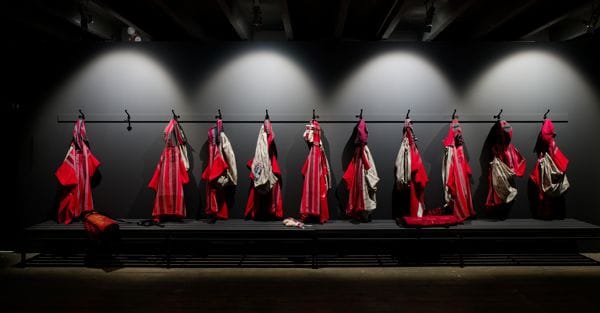
The Fondazione Furla chose her for a performance presented this year at Arte Fiera in Bologna, entitled Wardrobe, with an allusion to the idea of guarding. In addition, he recently inaugurated a solo exhibition at the Kunsthalle Wien and will participate in two group shows at the Frac-Artothèque Nouvelle-Aquitaine and at Meymac in France (at Ciaccia Levi, his works range from EUR 4,000 to 15,000). The increasingly global aspect of the relationship between art and fashion also emerges from Max Mara’s choice this year to change direction: after having collaborated for 20 years with the Whitechapel Gallery in London, supporting artists who over time have become recognised figures in the art system, the prize now explores new territories, becoming nomadic. The first edition will be in collaboration with Indonesia’s leading museum, the Macan in Jakarta. “The Prize evolves into an instrument of cultural diplomacy and international dialogue,” explained curator Cecilia Alemani. “Innovation today is no longer a Western monopoly.” The selected artists are the Indonesians Betty Adii, Dzikra Afifah, Ipeh Nur, Mira Rizki and Dian Suci: they will have the opportunity to work in Italia for six months, crossing their practice with our tradition. From Brazil comes Manuela Navas, a self-taught artist, class of 1996, chosen by the Milanese brand Retori for the first exhibition in its new store in Via della Spiga. Her monographic exhibition, Chupim, curated by Samuele Visentin, presents a series of small-format paintings originally made to illustrate the children’s book of the same name by Brazilian author Itamar Vieira Junior. “Manuela Navas responds well to the philosophy of self-discovery and destiny that underpins the brand,” explains Visentin. “There is a light-hearted spirit in her works, which translates into the figures, the colours of the landscape, the movements and interactions between the characters. One perceives the sense of belonging to the community he represents and the affectionate tone with which he approaches it. He is able to deal with even delicate themes – rural poverty, the relationship between man and nature, seasonal work – in a way that is nevertheless poetic’.
Navas is represented by Janaina Torres Galeria in São Paulo, with prices ranging between $3,000 and $15,000. The artist has also been a source of inspiration for founder and creative director Salma Rachid and her design team. The exhibition is the first collaboration in a series that will continue in April, in conjunction with Miart and Salone del Mobile. with even more artists, including another Brazilian, Gustavo Nazareno. Speaking of art and fashion, one cannot help but think of Miuccia Prada, patron both with Miu Miu, with performances during Art Basel Paris, and with the Fondazione Prada, for more than 30 years at the forefront of the Italian and international art scene, where the multimedia project of Chinese artist Cao Fei has been on show for a few days. During Design Week, there was also the fifth edition of Prada Frames, an annual symposium, curated by Formafantasma, this year entitled In Sight, dedicated to the theme of the image as a cultural, political and material element. Also during the Salone, the Unipol Group’s business museum CUBO hosted in the Unipol Tower in Milan the project Abitare il Nero. Da Alberto Burri ai Fashion Designers della Scuola giapponese, in which the Italian masterpiece Black with dots by the master was in dialogue with five creations by Issey Miyake, Yohji Yamamoto and Junya Watanabe, among the most radical contemporary Japanese designers. Plan C’s shop in Via Manzoni also became a space for exhibitions, thanks to the collaboration with art advisor Margherita Castiglioni. “I proposed artists with an aesthetic that spoke to the brand,” explained Margherita Castiglioni. “We started with Christoph Niemann, an already established artist, while the second exhibition was dedicated to Annamarie Ho, a young American based in Milan. The space is open for projects, events, book launches’. Art has also entered this year’s advertising campaign, with inflatable sculptures by the long-established Italian artist Franco Mazzucchelli, who has risen in price in recent years also thanks to the work of the Berlin gallery ChertLüdde (prices from 10,000 to 60,000 euro).
[ad_2]
Source link