[ad_1]
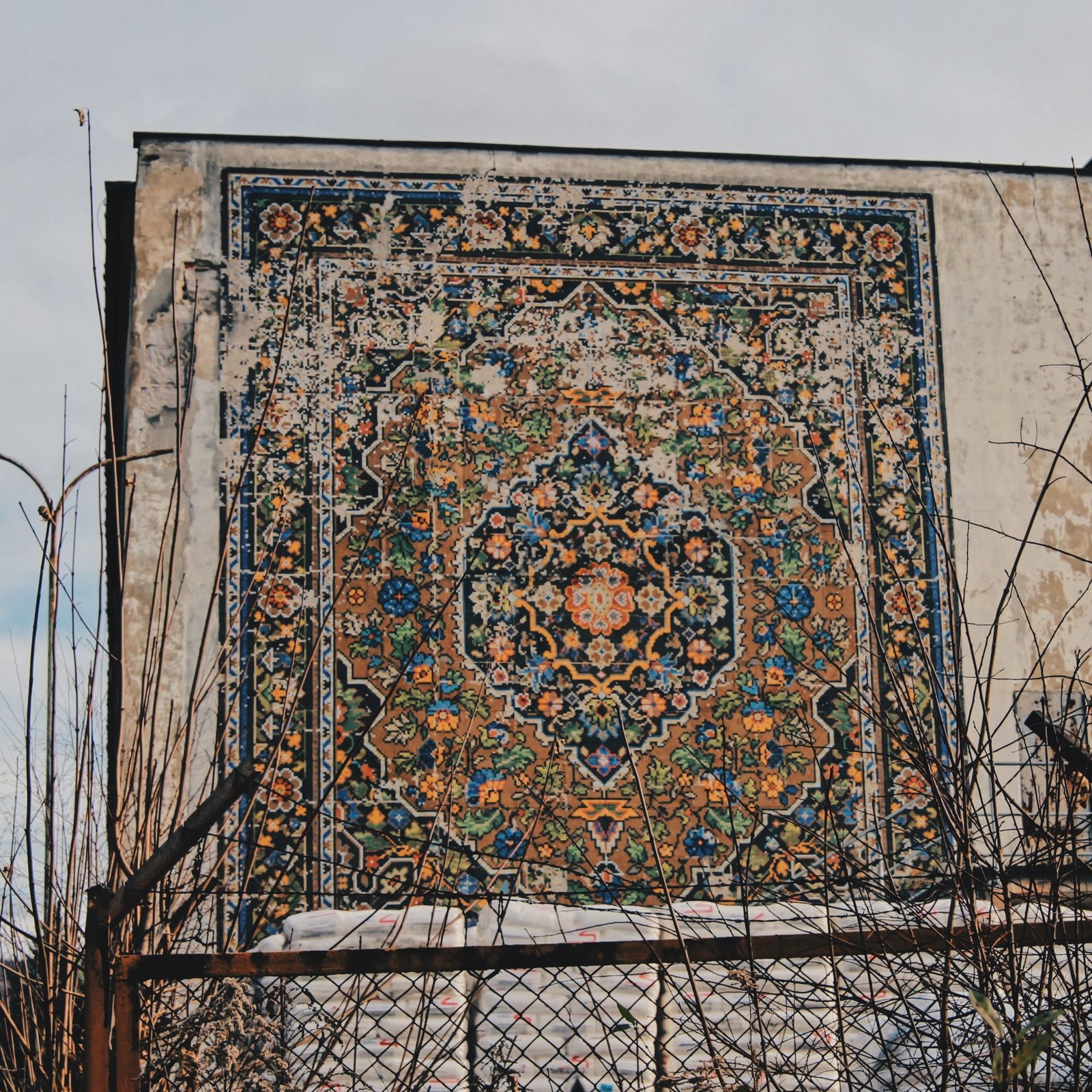
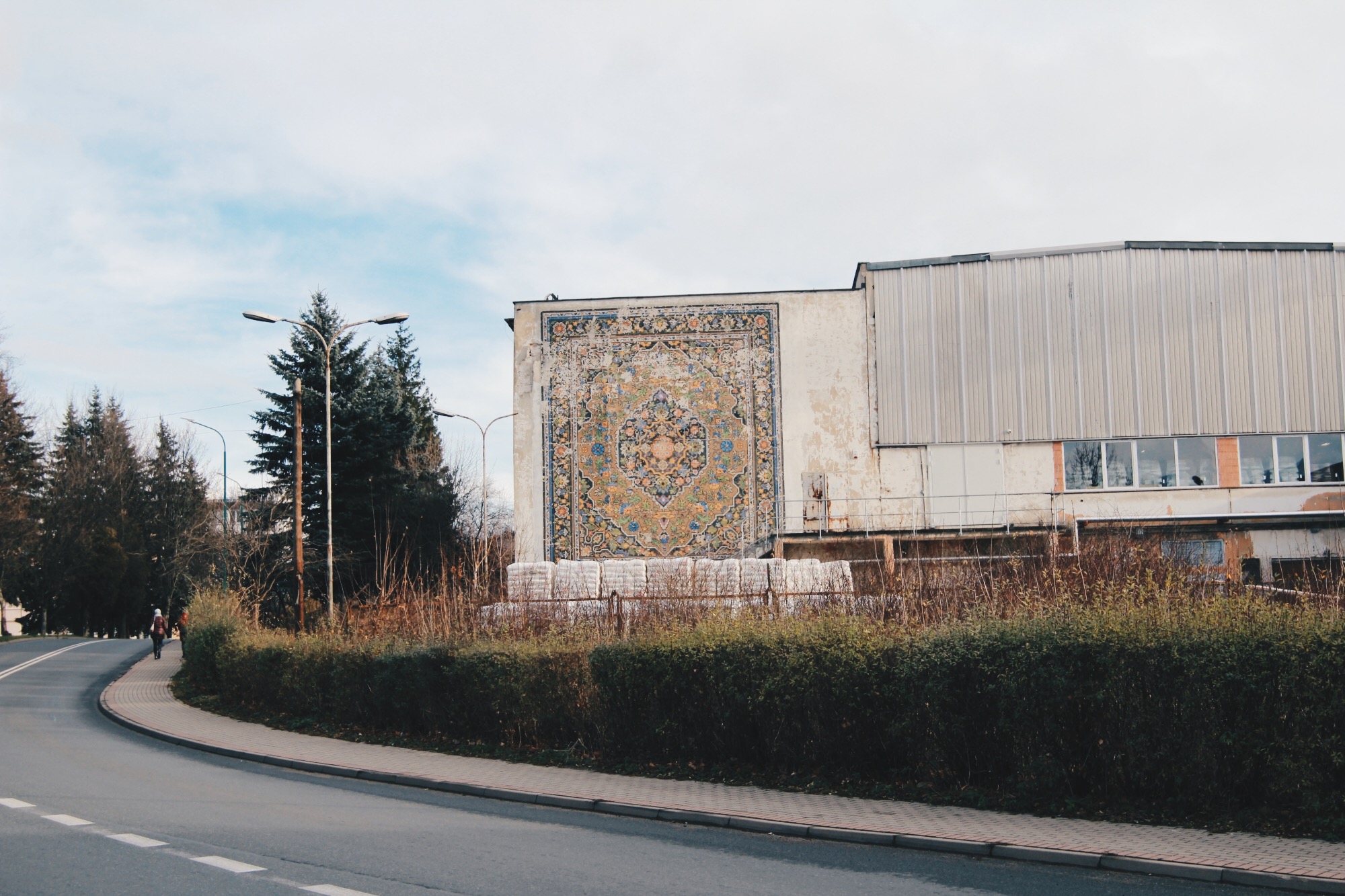
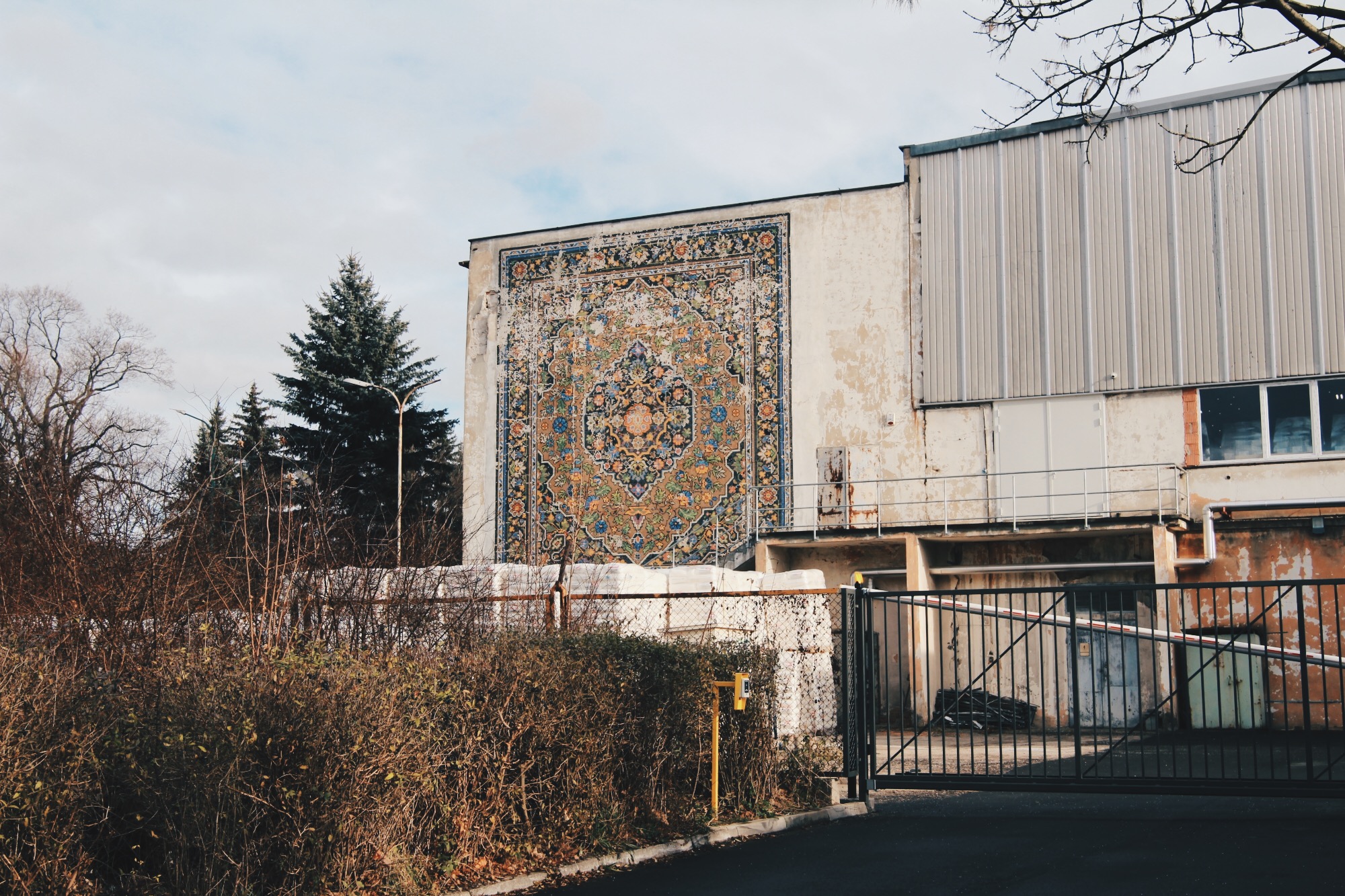
On 15 May 2026, the Lower Silesian Provincial Conservator of Monuments officially initiated administrative proceedings regarding the inclusion in the register of movable monuments of the ceramic mosaic adorning the façade of the former Carpet Factory in Kowary. This decision could determine the future of one of the most recognisable examples of post-war decorative art in Lower Silesia.
The mosaic was created in 1978 in the factory’s design studio. A team of ten, led by Stanisława Lewkowicz, worked on it for three months. The composition was laid out using over 169,000 glass tiles measuring 2×2 cm, produced at the Wałbrzych Porcelain Factory. Eighteen colours were used, creating an effect reminiscent of a Smyrna-style chenille carpet – a product for which the Kowary factory was famous for decades. The whole piece is 9 metres long and 8 metres wide, forming a monumental, decorative feature on the building’s façade.
Over the years, however, the mosaic has not been subject to systematic conservation work. Further fragments began to fall off, and its condition – already worrying in 2019 – is now significantly worse. The fragments that have been saved are being collected and stored by Andrzej Olszewski from the Museum of Sentiments, which operates in the former factory. It is the local community that has been calling for the mosaic to be granted legal protection for many years. Their determination was one of the key factors in initiating the procedure.
Entry in the register of movable monuments means the highest level of protection for this work. It enables monitoring of its condition and, in exceptional circumstances, provides a basis for the safe dismantling and relocation of the mosaic if leaving it on the façade would threaten the integrity of the building. It is a tool that could prove decisive in saving the “glass carpet” – one of the most distinctive traces of Kowary’s industrial history.


The history of the factory itself dates back to the second half of the 19th century, when a group of locals travelled to Izmir in Turkey to learn carpet-making techniques. Initially, the carpets were produced by tying knots on wooden looms. The first decades of the 20th century brought rapid growth, as new machinery enabled the weaving of carpets using 64 colours of wool. In the 1930s, products from Kowary were exported to Western Europe, Scandinavia and the Americas. Following a period of nationalisation, the factory was privatised in the 1990s and finally closed in 2009.
Although created during the factory’s twilight years, the mosaic is one of the most valuable physical testimonies to its history. It combines local craft traditions with the aesthetic of monumental ceramic decorations characteristic of the 1970s. Its artistic, historical and scientific value is indisputable, and its loss – irreversible.
The conservator’s decision is an important step towards protecting the region’s industrial heritage. It is also proof that public mobilisation can have a real impact on the fate of material evidence of the past. In the case of Kowary, the voice of the residents proved to be the force that restored the mosaic’s chance of a future.
source: Lower Silesian Provincial Conservator of Monuments
photos: Museum of Sentiments (muzeumsentymentow.pl,facebook.com/MuzeumSentymentow)
Read also:Interesting facts|Mosaic|Ceramics|Monument|Renovation|whiteMAD on Instagram
[ad_2]
Source link