[ad_1]

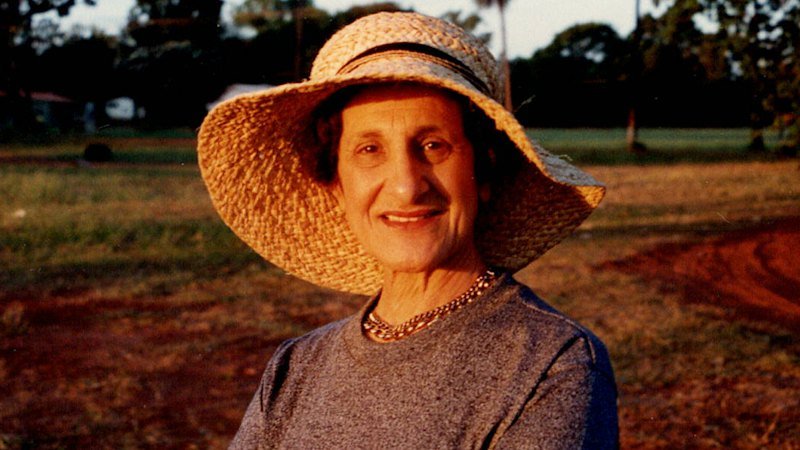
Long before she became the state’s first female governor, Dame Marie Bashir was a psychiatrist travelling to the remote corners of Australia to fulfil her public role.
She travelled – in the words of Palya Art (then Didgeri Air Art Tours) director Helen Read, a nurse pilot who flew Bashir across NSW during the 1990s – with a genuine desire to “put her finger on the pulse of the nation”.
Next Tuesday, the Woolloomooloo Indigenous gallery Art Leven will auction 87 works from the private collection of Bashir and her husband, the late businessman, former Wallaby captain and one-time Lord Mayor of Sydney, Sir Nicholas Shehadie. The pieces were largely collected during frequent visits to the Australian outback and kept in the couple’s home in Palm Beach.
Among the highlights are two paintings by Emily Kame Kngwarreye [spelt per the catalogue] —Untitled (Awelye), 1994, and Alhalkere, 1993 – and Rover Thomas’s Wahrooroo (Milky Way) at Warmun, which is expected to fetch between $30,000 and $50,000. The up-for- auction collection also features works by Garry Shead, Richard Bell and Robert Campbell Jr.
Bashir died in January this year at age 95, having served as Governor of NSW from 2001 to 2014; Sir Nicholas predeceased her in 2018.
Gallerist Ace Bourke first met Bashir when he was co-director of the Hogarth Galleries in Paddington, and she was leading the state’s mental health system. He remembers a woman of relentless curiosity. “She was very sophisticated about art, as she was about music – her violin playing was well documented,” Bourke says. “She didn’t need my advice; she had a superb eye.”
Bashir and Shehadie often toured the country with fellow collectors Elizabeth Laverty and Anne Lewis. These women were influential figures whose patronage helped introduce Aboriginal art to a wider Australian audience. The group would charter twin-engine planes to reach remote art centres, but Bourke notes these trips were never driven by mere acquisition.
While others might have rested after a long flight to Tennant Creek, Bashir was often up before breakfast. “She had already walked the length of the town, speaking with locals and taking everything in,” Bourke recalls. He remembers her tireless energy – balancing the NSW mental health budget late into the night and engaging with the community by dawn.
For Bashir, collecting was a form of education. “It was never simply about the object; it was about learning, sharing knowledge, and creating a deeper understanding across generations,” Bourke says. “She talked at length with artists and their families and formed lasting relationships. She immersed herself in communities with humility, feeling it was a privilege to be on the artists’ Country.”
Bashir’s affinity for the arts was lifelong; her mother, Victoria Melick, was an artist, and her father, Michael Bashir, was a medical graduate from the American University of Beirut. Before her vice-regal appointment, Bashir was a clinical professor of psychiatry at the University of Sydney and a senior consultant to the Aboriginal Medical Service in Redfern and Kempsey.
Her first major purchase in the collection was Arthur Boyd’s Nebuchadnezzar and a Windmill (1967). One of the earliest First Nations works in the collection is the ceramic Peethar and Pharra (Love Magic Egg), c.1986, by Gloria Fletcher Thancoupie, acquired after Bashir and Margaret Tuckson took the artist to dinner. Most works in the collection, notes Mirri Leven, are modest in scale – intimate reminders of personal encounters.
Bashir’s daughter, Susan Shehadie, recalls a 2006 dinner at the family home where artists from Jirrawun, in the East Kimberley, visited, and Phyllis Thomas sang for them, a “deeply special moment” that stayed with the governor for years.
Read notes that on return from her outback visits, Bashir would do all she could to assist, writing in support of funding applications by arts centres. Hector Jandany stayed at her home so he could undergo eye surgery.
Bashir also collected multiple works by the East Kimberley painter Queenie McKenzie, opening several of McKenzie’s exhibitions. Mary and Joseph (1997), painted in natural ochres, exemplifies McKenzie’s ability to translate biblical narratives through the visual language of Gija Country. Four of McKenzie’s works are for auction.
Start the day with a summary of the day’s most important and interesting stories, analysis and insights. Sign up for our Morning Edition newsletter.
From our partners
[ad_2]
Source link