[ad_1]
Shivani Pinapotu is a New York City-based spatial designer who is helping redefine the relationship between interior design, architecture, storytelling and the culinary arts.
Just as spatial design is increasingly blurring the boundaries between the environments we inhabit and the rituals we partake in as a society. She found herself at the intersection of food and design from her love of community-driven culinary experiences, to her strong background in design.
Pinapotu, who has a Master of Design (MDes) in Interior Studies from the Rhode Island School of Design (RISD), started her career in India, working in architecture studios in Bangalore and New Delhi, before moving to the States.
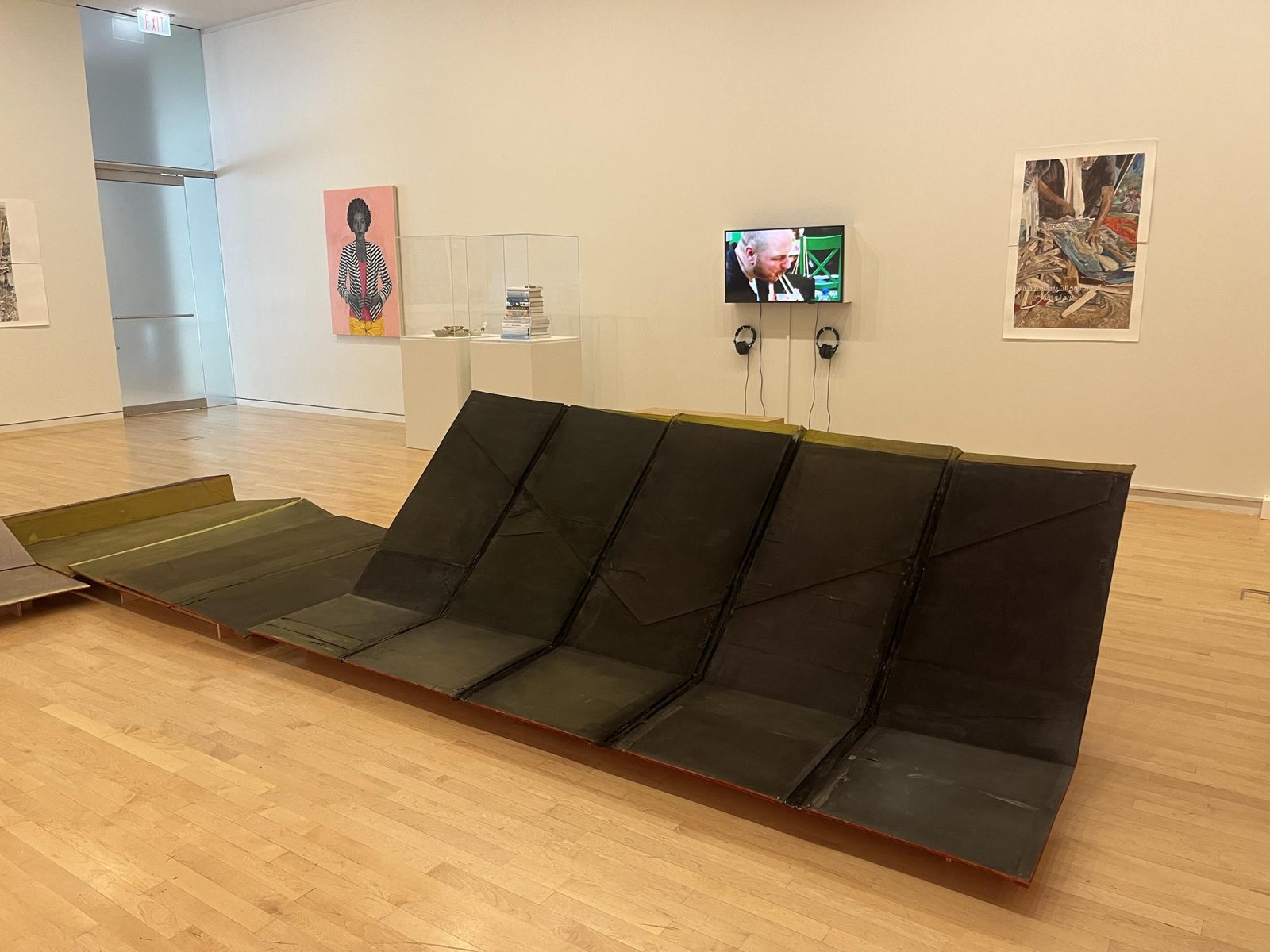
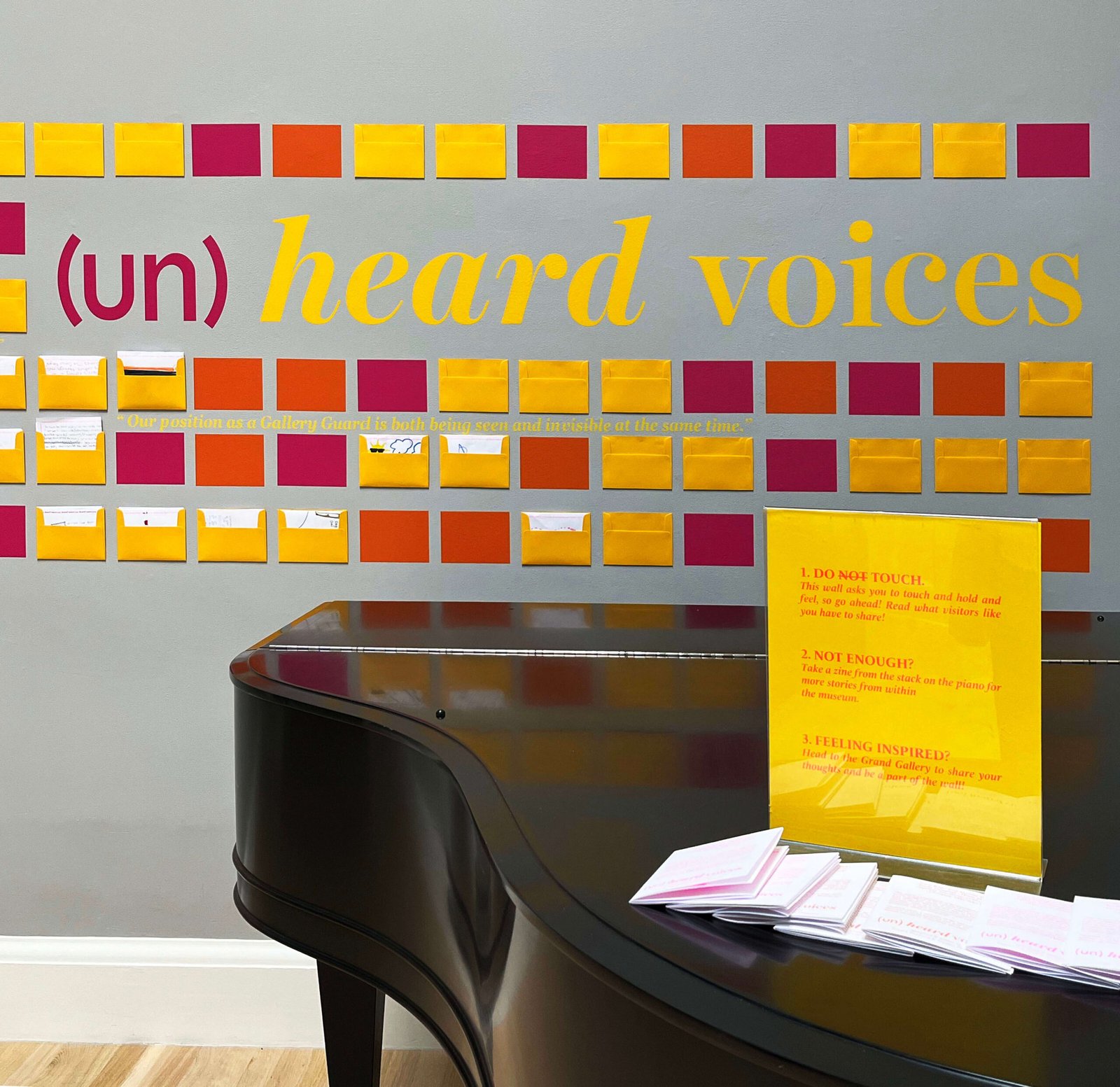
Pinapotu’s commitment to narratives that resonate with diverse audiences has not gone unnoticed. In 2023, she was awarded the prestigious Dorner Prize for the project “(un)heard voices” at the RISD Museum, a work that highlighted her dedication to inclusive and culturally responsible design. This followed her tenure as a RISD Fellow from 2021 to 2023.
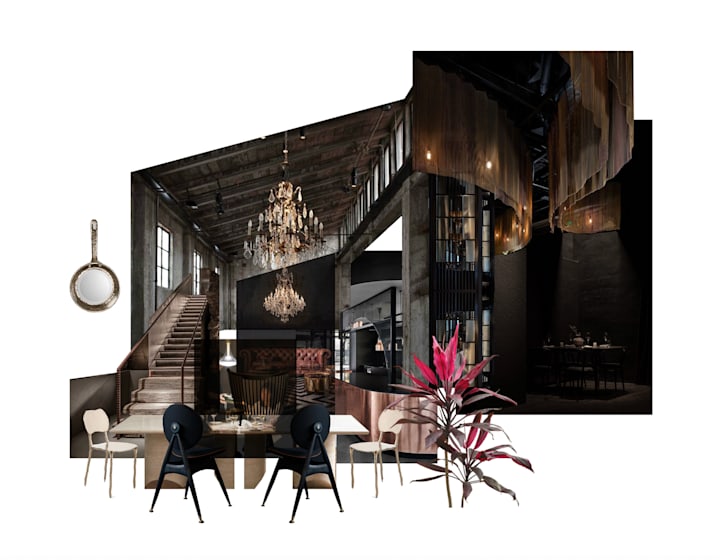
With her design background, and her love of community-based dining experiences, her methodology utilizes collage as a foundational tool for designing meaningful human experiences.
Food, design, and storytelling meet together, for Pinapotu. “They meet in the same place, really, in the question of how an experience gets felt rather than just seen or consumed,” she said. “Food tells stories about culture, memory, and place. Design shapes the conditions under which those stories land, and storytelling is the thread that connects intention to experience. For me, designing a restaurant, kitchen or a set isn’t just about function or aesthetics.”
She adds: “It’s about creating an environment where something meaningful can happen between people. That’s what all three share: they’re all in the business of making people feel, without quite knowing why.”
Her academic contributions at RISD, where she served as a Teaching and Research Assistant, focused on the history of interior architecture and sustainable design futures. This historical groundwork informs her current design work, as she views modern design as a continuation of cultural narratives.
Growing up in India, Pinapotu explains that food is a very public experience. “It spills out onto streets, into markets, across thresholds, it belongs to everyone,” she said.
“Growing up in India, some of my most vivid memories are tied to eating: roasted corn on winter evenings, chaat in the local market, pakodas during the monsoon, fruit eaten whole with your bare hands in spring,” she adds. “These weren’t dining experiences in any formal sense, but they were profoundly spatial. The environment around the food was doing as much work as the food itself, pulling people together across every walk of life.”
This upbringing helped shape her own outlook as a designer. “I think that’s where my instinct for designing around gathering came from,” said Pinapotu. “Long before I had the language for it, I understood that space and food were in conversation.”
By identifying the cross points of food, design and storytelling, Pinapotu understands how an experience is felt, rather than consumed. Her multi-disciplinary design practice encompasses exhibition design, scenography and furniture design. She is accustomed to working on high profile hospitality projects, bringing food into urban environments and keeping the focus on shaping experiences that go beyond transactional activities, but help create stories that deserve to be retold.
The art of collaging is at the heart of Pinapotu’s practice. “I discovered the collages early on in my practice, during my time in Sweden,” she said. “I have learned that collages are a great medium of communication, in that they have little to no rules and require more imagination than skill. What fascinates me most about the collage is its tactility and movement.”
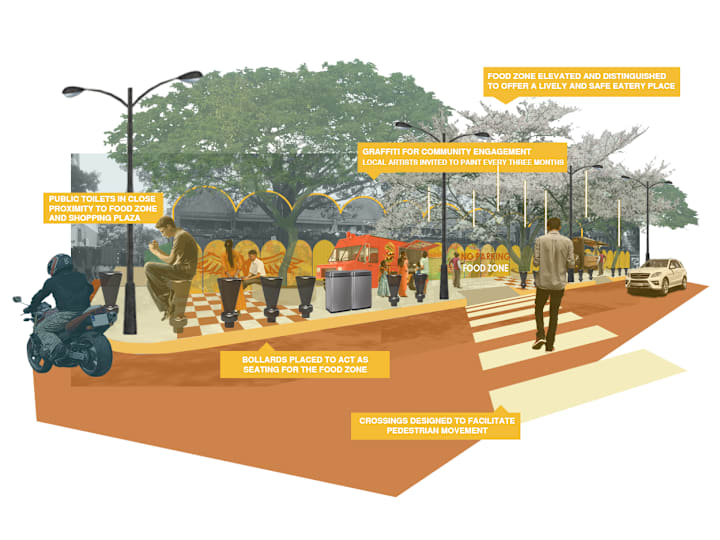
For Pinapotu, analog collages are a medium in themselves, and offer a tangible form of creativity to help problem-solve through the design process. “I find that it also helps communicate the flux in design while staying true to the spirit of the design concept,” she said. “It allows space for error and expansion, and opens up the design process.”
Collages also offer a level of tactility and movement that traditional architectural mediums lack. According to Pinapotu, the rationale behind using collage is to embrace the “flux” of design.
By using collage, Pinapotu maintains the spirit of a design concept while leaving room for error and expansion. This approach treats the design process as an evolving conversation rather than a set piece, a method that has proven particularly effective in her hospitality and residential projects.
“Design, as we account for it in schools, is often seen in isolation, devoid of context and implications,” said Pinapotu. “In real life, it is less a solution set in stone and more a bridge to an intention. Collages facilitate this stance, by allowing for multiplicity and randomness, creating a layered visual rather than an absolute render.”
This sets up her unique design approach for restaurants. In her role as a Designer, Pinapotu designs restaurants with a choreographic sensibility. This multi-level process involves the development of moodboards, schematic plans, design concepts, model studies, finishes and custom details. Every minute decision, such as the sightlines between tables, the acoustic zones, the movement of staff, the textures and colors, add to the overall experience. The goal is to create an environment where strangers can coexist for a few hours and feel a sense of belonging.
“A restaurant asks to be lived in, for about two hours, by strangers, repeatedly, night after night,” she said. “It needs to hold a mood without imposing it, to feel considered without feeling precious, to make everyone at the table feel like they belong to the space.”
Noting her overall approach, Pinapotu explains: “A restaurant is closer to a stage set than an interior, everything is in service of a performance that happens differently every night.”
She is currently working on a number of hospitality projects, including a sandwich shop on Madison Avenue nearing completion, and two Italian restaurants, in Manhattan and Brooklyn, set to open later this year.
[ad_2]
Source link