For collectors discovering CEPT, the first useful distinction is also the simplest: an original painting and an editioned print are different kinds of object. Both can carry the artist’s visual language, but they are made differently, documented differently and experienced differently. Understanding those differences makes it easier to choose a work for the right reasons, whether the attraction is colour, scale, process, subject or the history behind it.
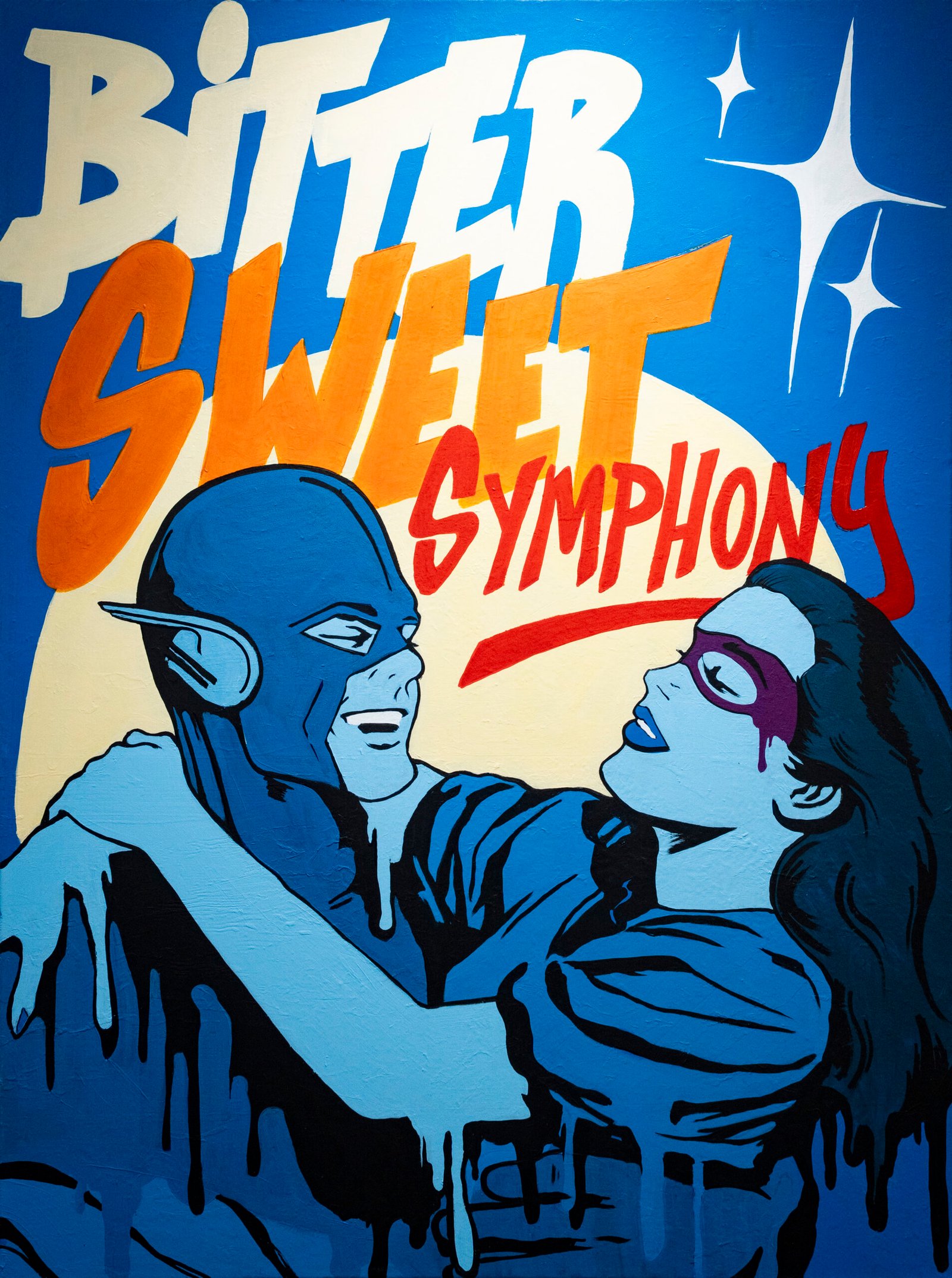
CEPT’s practice grew from graffiti, but it does not remain fixed to one surface or material. His work moves between walls, canvas, paper and wood, using approaches that include spray paint, acrylic, oil and screenprinting. Across those formats, the recurring vocabulary is recognisable: bold colour, comic book imagery, imagined characters, romance, science fiction and the energy of letter-based graffiti.
Original Paintings: Surface, Scale and Material
An original painting is a single work rather than one impression from an edition. The support matters because canvas, paper and wood each respond differently to paint. Canvas can carry expansive compositions while remaining relatively light for its size. Wood provides a firmer surface and can make layered oil and spray paint feel especially physical. Paper is more sensitive and usually needs protective framing.
The materials should always be taken from the artwork record rather than guessed from appearance. A sprayed passage can sit beside brushed oil or acrylic, while a glossy or sharply edged section may still have been produced by hand. Good documentation should identify the medium, dimensions, date, support, signature and any accompanying certificate.
London Art Exchange currently lists several unique CEPT paintings across different materials. Tutto Rocks Passa, dated 2023, is described as acrylic on canvas and measures 112 by 81 centimetres. The Zen Sweepers, dated 2013, is a larger oil on canvas measuring 166 by 137 centimetres. Space in the place, dated 2025, combines oil and spray paint on wood at 125 by 125 centimetres. My mistakes were made for you, dated 2018, is listed as oil on canvas and measures 185 by 111 centimetres. Each page describes the work as unique and includes a certificate of authenticity.

These examples also show why collectors should look beyond subject alone. A compact acrylic canvas will occupy a room differently from a painting almost two metres across. A wood panel may require different hanging hardware from a stretched canvas. Before acquiring any large work, confirm the framed or unframed size, weight, hanging system and access route into the intended space.
How CEPT Screenprints Are Made
Screenprinting is a printmaking process rather than a photographic reproduction. Ink is pushed through open areas of a mesh screen onto paper or another support. Separate colours generally require separate stencils and printing passes. The sheet must be carefully aligned so that each new layer registers with those already printed. This layered method suits CEPT’s graphic shapes, concentrated colour and comic-inspired imagery.
The number of layers is not a measure of artistic quality on its own. A two-layer print can be deliberately spare and powerful, while a multilayer print can create denser colour relationships. What matters is how the process serves the image and whether the catalogue description clearly states the technique.
Documented CEPT editions demonstrate that range. Nelly Duff describes My Mistakes Were Made For You as a two-layer screenprint measuring 60 by 80.3 centimetres, from an edition of 30. The Force Within is listed as a multilayer screenprint, hand-coloured by the artist, measuring 60 by 60 centimetres, from an edition of 25. Seated Yoga is a screenprint hand-finished with stencil aerosol on fine-art paper, measuring approximately 70 by 61 centimetres, from an edition of 10 and hand-signed by the artist. Another documented work, I Bomb Therefore I Am from 2010, is recorded as a hand-finished screenprint on paper, measuring 70 by 50 centimetres, from an edition of 35.
What an Edition Number Means
A notation such as 7/30 identifies one impression within a stated edition of 30. The first number identifies that particular impression; the second gives the size of the numbered edition. Lower numbers are not automatically better than higher ones. The more important questions are whether the print is authentic, properly described, in good condition and consistent with the published edition.
Collectors may also encounter artist’s proofs, commonly marked A/P or AP. These sit outside the main numbered edition, so buyers should ask how many proofs exist and whether they differ from the standard edition. A signature, title, date, blind stamp, publisher information or certificate can all contribute to the documentary record, but no single feature should be treated as a substitute for complete provenance.
Condition deserves close attention. Look for creasing, staining, fading, surface abrasion, foxing, trimming or damage from previous framing. Ask whether the sheet has been hinged with conservation materials and whether it has spent long periods in direct sunlight. For valuable or delicate works on paper, a qualified paper conservator or experienced art framer can provide appropriate advice.
Hand-Finishing: Where the Editions Begin to Differ
Hand-finishing adds individually applied work after, or alongside, the repeatable printed layers. Depending on the edition, this may involve aerosol, stencil work, painted colour or other interventions. In CEPT’s documented editions, the description of Seated Yoga specifically identifies stencil aerosol, while The Force Within is described as hand-coloured by the artist.
The phrase “hand-finished” should prompt careful looking rather than assumptions. Ask what was added, who applied it and how much variation exists between impressions. Two works can belong to the same edition while displaying visible differences in sprayed marks or colour. Those differences should be assessed directly through detailed photographs or an in-person viewing.

CEPT Work Through London Art Exchange
The CEPT collection at London Art Exchange allows collectors to compare works by year, scale and material. At the time of writing, individual pages for Tutto Rocks Passa, The Zen Sweepers, Space in the place and My mistakes were made for you show one work in stock, with prices available on application. Availability can change, so collectors should confirm the current position directly with the gallery before relying on an online listing.
A sensible enquiry should request the complete artwork specification, current condition report, high-resolution front and detail photographs, signature location, provenance, certificate information, framing status and delivery requirements. For a painting, ask whether the dimensions include the frame and whether the surface has any condition issues or restoration history. For a print, confirm the edition number, edition size, paper, printing method, hand-finishing, signature and whether the sheet has been trimmed or mounted.

Most importantly, choose by looking closely. CEPT’s originals offer singular surfaces, physical scale and the full range of his studio decisions. His prints translate parts of that language into editioned form, sometimes with hand-applied variations that bring the energy of aerosol and painting back into the sheet. Neither category is a shortcut to guaranteed financial performance. London Art Exchange itself states that it does not promise future value, resale, liquidity or financial return.
The strongest purchase decision is therefore grounded in the work itself and supported by reliable records. Confirm exactly what the object is, understand how it was made, examine its condition and documentation, and select the piece that continues to hold attention after the first impact of colour.