[ad_1]
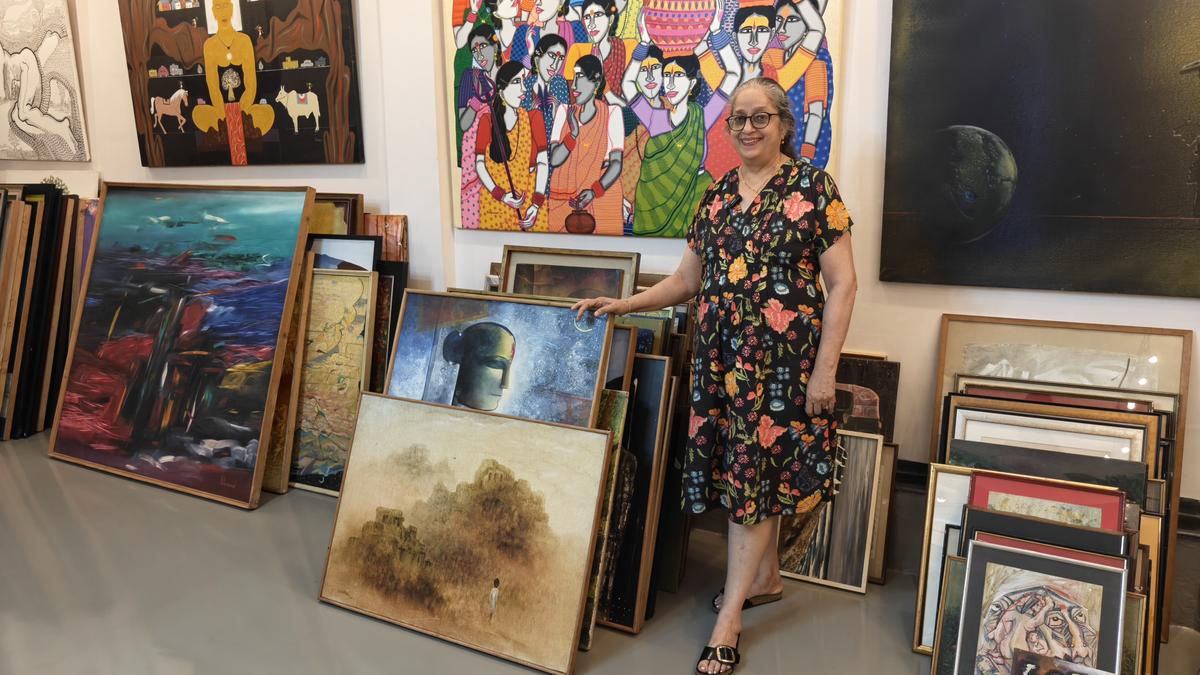
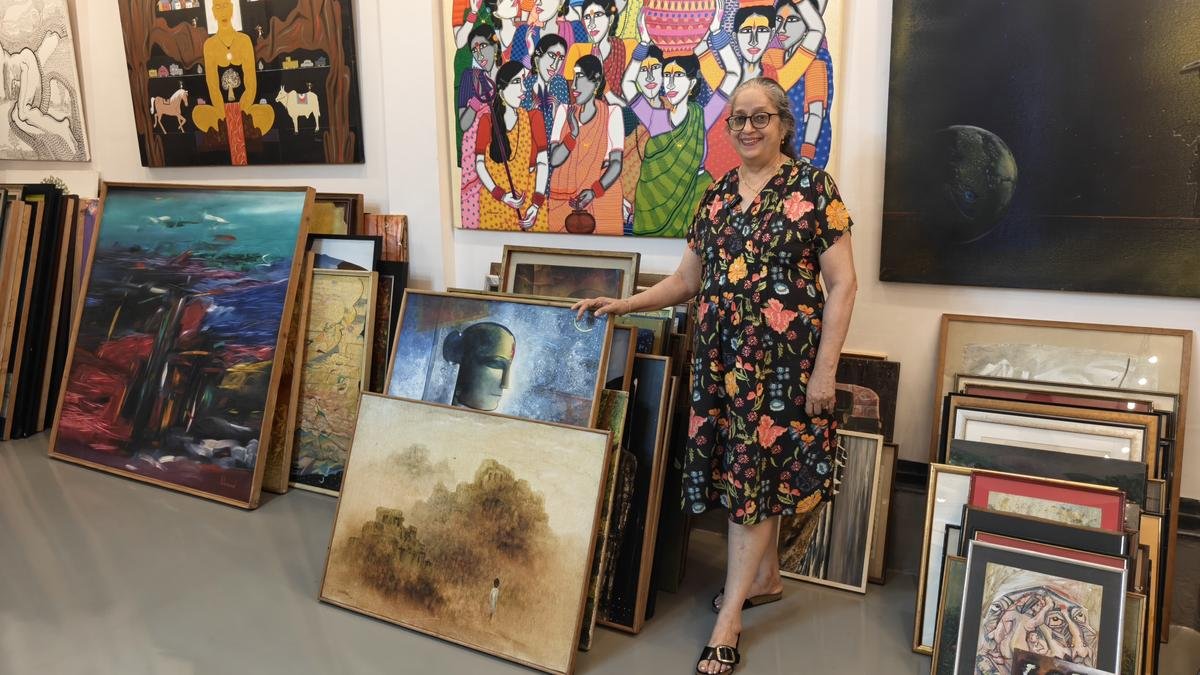
Sarala Banerjee, owner of the gallery
| Photo Credit: Sangita Rajan
How is art valued? That is an age old question.
Valuation often requires balancing the cultural significance with real-time demand and condition of a work of art. However, these rules go out the window if something truly rare is unearthed. So in a nutshell, the rules are not set in stone, or on canvas.
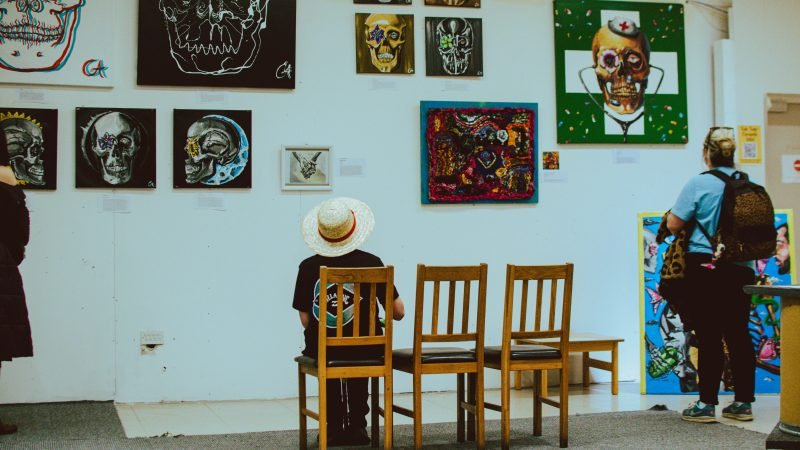
That ambiguity is now unfolding inside Sarala’s Art Centre, where decades worth of paintings, prints and sculptures, are quietly finding their way back into public view.
As the gallery marks 60 years, it has also opened up its archives for an ongoing sale that feels less like a conventional exhibition and more like an archaeological dig through the history of modern Indian art. Stacked across the gallery’s ground floor, are works by celebrated names such as MF Husain and Paritosh Sen alongside lesser-known artists from across the country, many of whom passed through the gallery’s orbit over the decades.
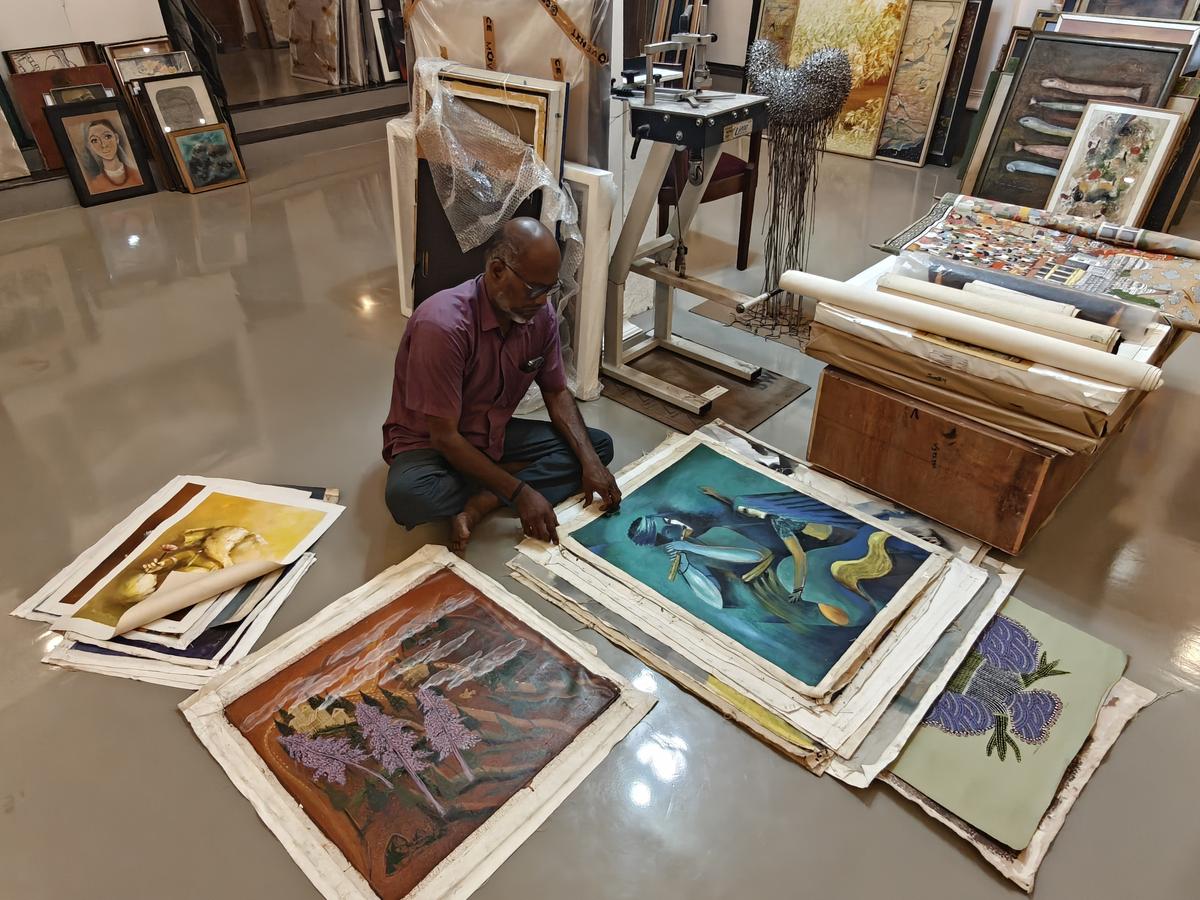
Art prints and canvases
| Photo Credit:
Sangita Rajan
“We deal with so many artists and sometimes we don’t do justice to them,” says Sarala Banerjee, owner of the gallery. “Things go into the background and then we don’t even see them for many years. So this is a way of taking everything out from inside and making it visible.”
Rather than returning unsold works to artists, she says the gallery chose to put them back into circulation at accessible prices. The sale also emerges from a practical necessity. Over six decades, the gallery has accumulated an enormous collection of works from older acquisitions to more recent additions, leaving it with little room to breathe. “We also had a lack of space since we have too much stuff from the past and also recent works. So we are trying to make it accessible to people and let them enjoy what we do,” Sarala says.

The scale of the archive is staggering. According to her, the gallery has worked with nearly 400 to 500 artists over the years. The current sale alone features works by more than 100 artists spanning multiple generations, mediums and styles. Abstract works sit beside landscapes, ink drawings beside figurative studies, tribal art beside contemporary prints. There are lithographs dating back to the late 1980s, Raja Ravi Varma prints, sculptures, and paintings whose labels have long disappeared with time. “Sometimes we have so much art that it is not even named. That is how old some of these paintings are,” she says walking through the stacks of paintings.
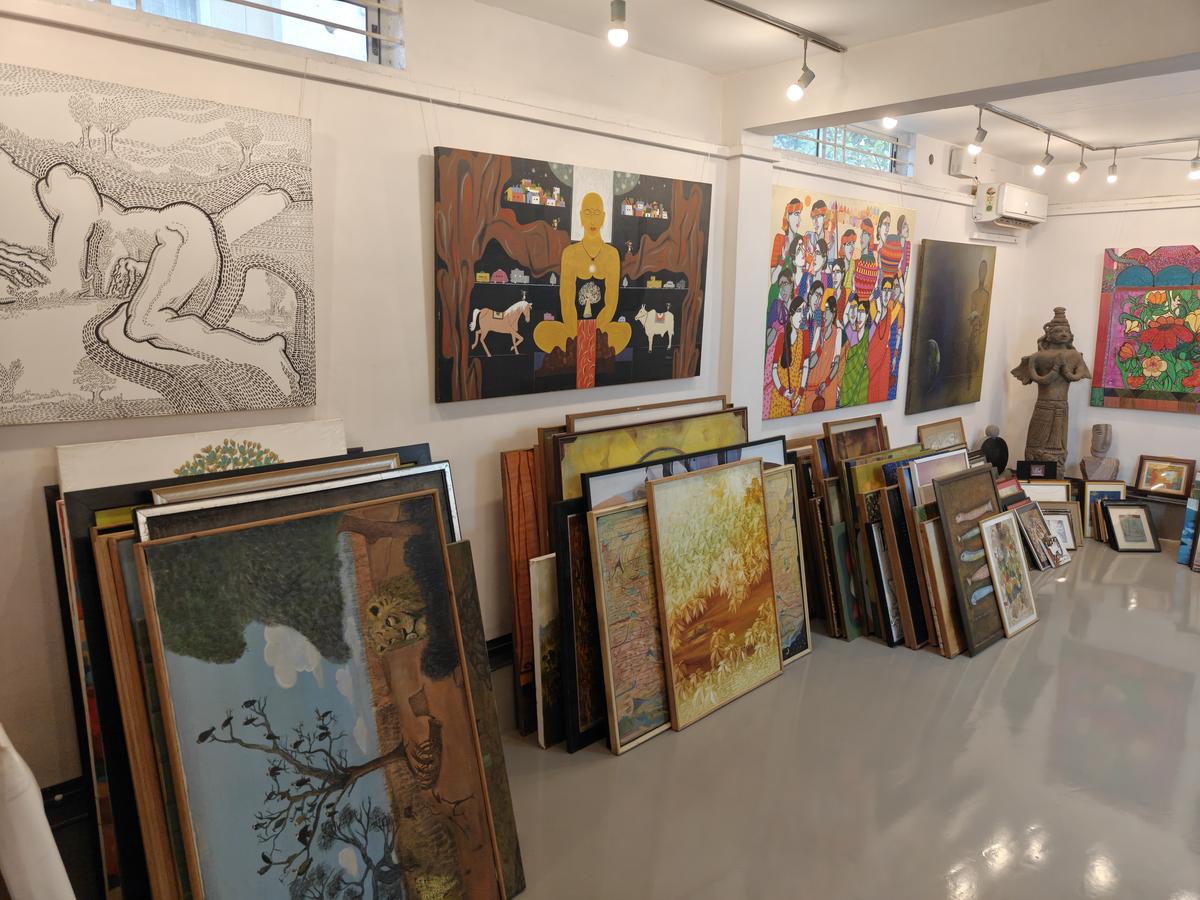
Stacks of archival art
| Photo Credit:
Sangita Rajan
Unlike traditional exhibitions that revolve around a single theme or medium, this sale thrives on unpredictability. Irrespective of the kind of art one is into, be it abstract, ink-work, landscapes, colour, monochrome, prints or sketches, there is something for everyone. Sarala, however, seems less interested in the hierarchy of names than in the act of discovery itself. Asked about the most valuable work in the collection, she points briefly to a signed Husain art work before immediately distancing herself from the idea of market value. “For me, value is how beautiful the work is and how it speaks to me. Personally, names don’t matter to me,” she says.
That philosophy perhaps explains the unusual way the sale has been organised. Visitors are encouraged to sift through stacks, pause at unfamiliar names and stumble onto unexpected finds. “I want people to rummage and feel that curiosity and look through the stacks,” she says.
The archival art sale at Sarala’s Art Centre, Teynampet is on till May 20.
Published – May 08, 2026 05:33 pm IST
[ad_2]
Source link